

Rewiring and part rewires
Cable does not last forever. Rubber, lead and early PVC installations reach a point where testing alone will not save them.
Does the property actually need a rewire
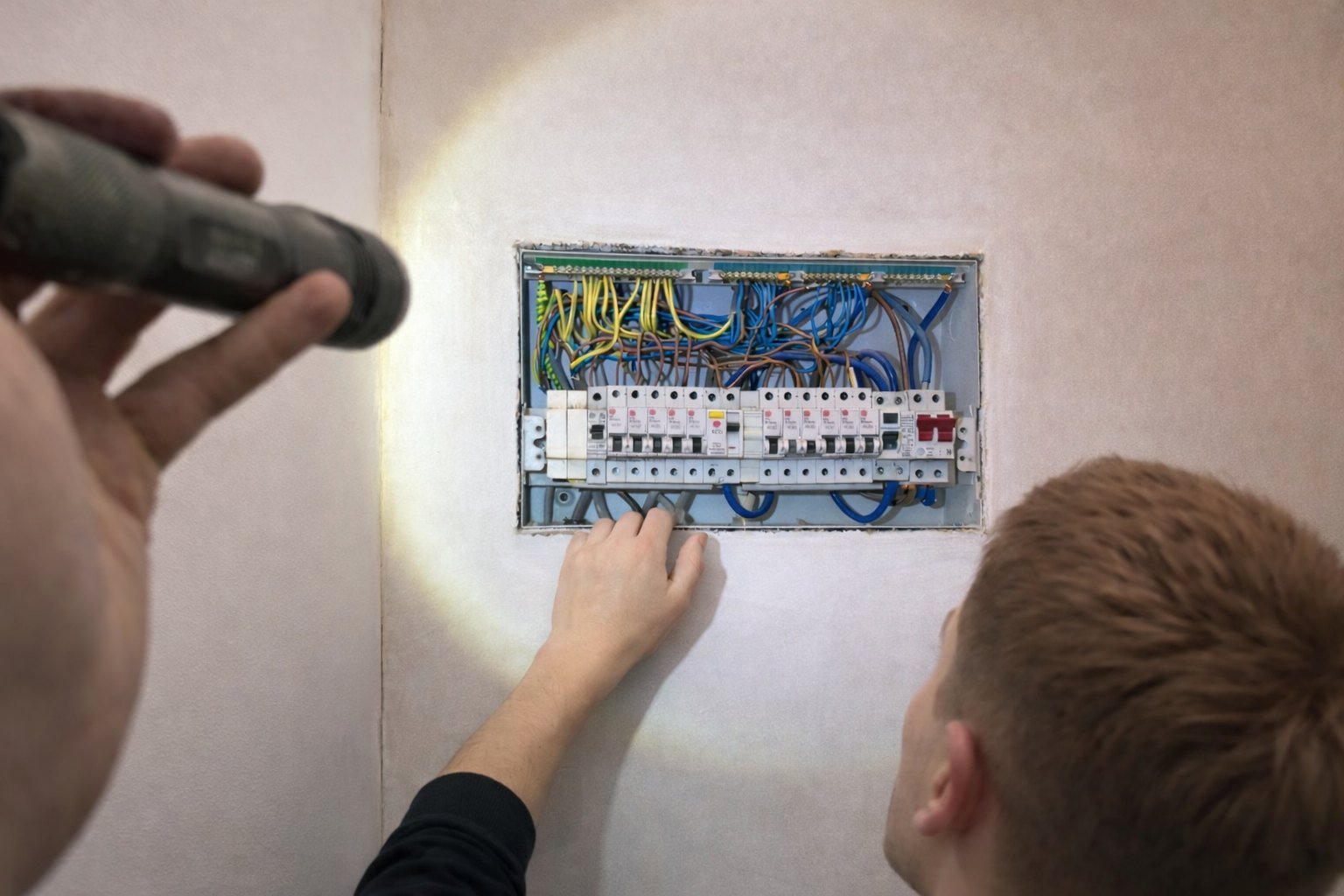
Rewiring is disruptive and expensive, so it should be based on evidence rather than the age of the house. We test first. If insulation resistance readings are collapsing across multiple circuits, if the cable sheath crumbles when it is moved, or if there is rubber or lead insulation still in service, a rewire is the honest answer.
If the readings are sound and the problem is a tired consumer unit and a handful of dead sockets, we will tell you that instead.
Part rewires are common: the lighting on the original cable while the ring finals were replaced in the eighties, or a kitchen extension circuit that never had its own protection.
Call 01273 095564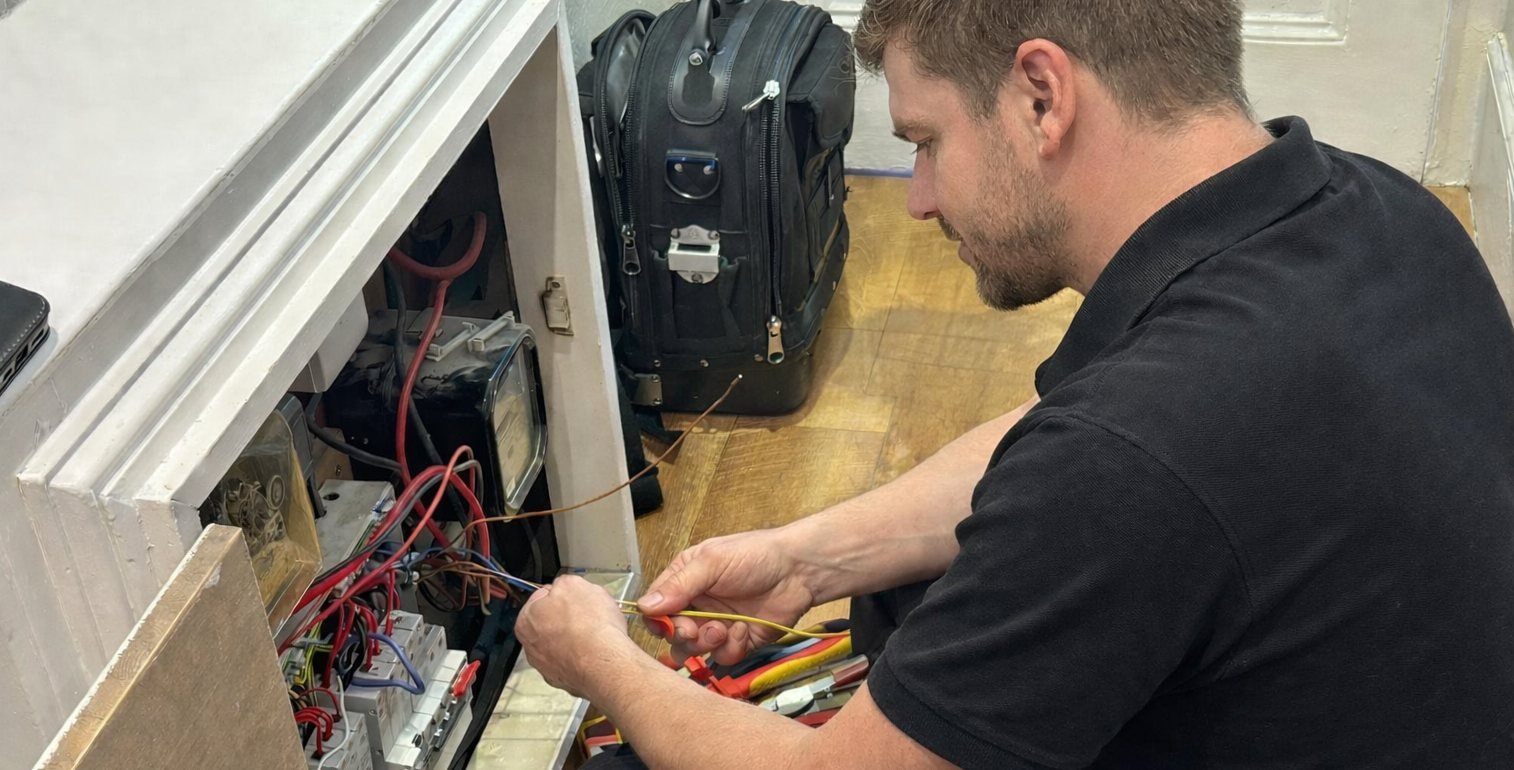
What a rewire involves
Survey and written scope
Room by room: every socket, switch, light and appliance point agreed in writing before anything is lifted.
First fix
Cables run in floor voids and chased walls, back boxes set, and the whole installation tested dead before plastering.
Second fix
Accessories fitted, board connected, circuits energised and tested one at a time.
Smoke and heat detection
Mains powered interlinked alarms fitted where the work makes them a requirement or simply a good idea.
Making good
Chases filled and floors reinstated. Decoration is normally the homeowner, and we say so at quote stage.
Full certification
An Electrical Installation Certificate, schedules of inspection and test results, and Part P notification.
Disruption, planned in days not weeks
A rewire is the most disruptive job in domestic electrics, which is exactly why it deserves a proper programme: a written scope agreed room by room, first fix tested before anything is plastered over, and power restored to the rooms you live in each evening.
You get a fixed price, a start date and the number of days on site before any floor comes up.
Talk through a rewireTesting decides the scope
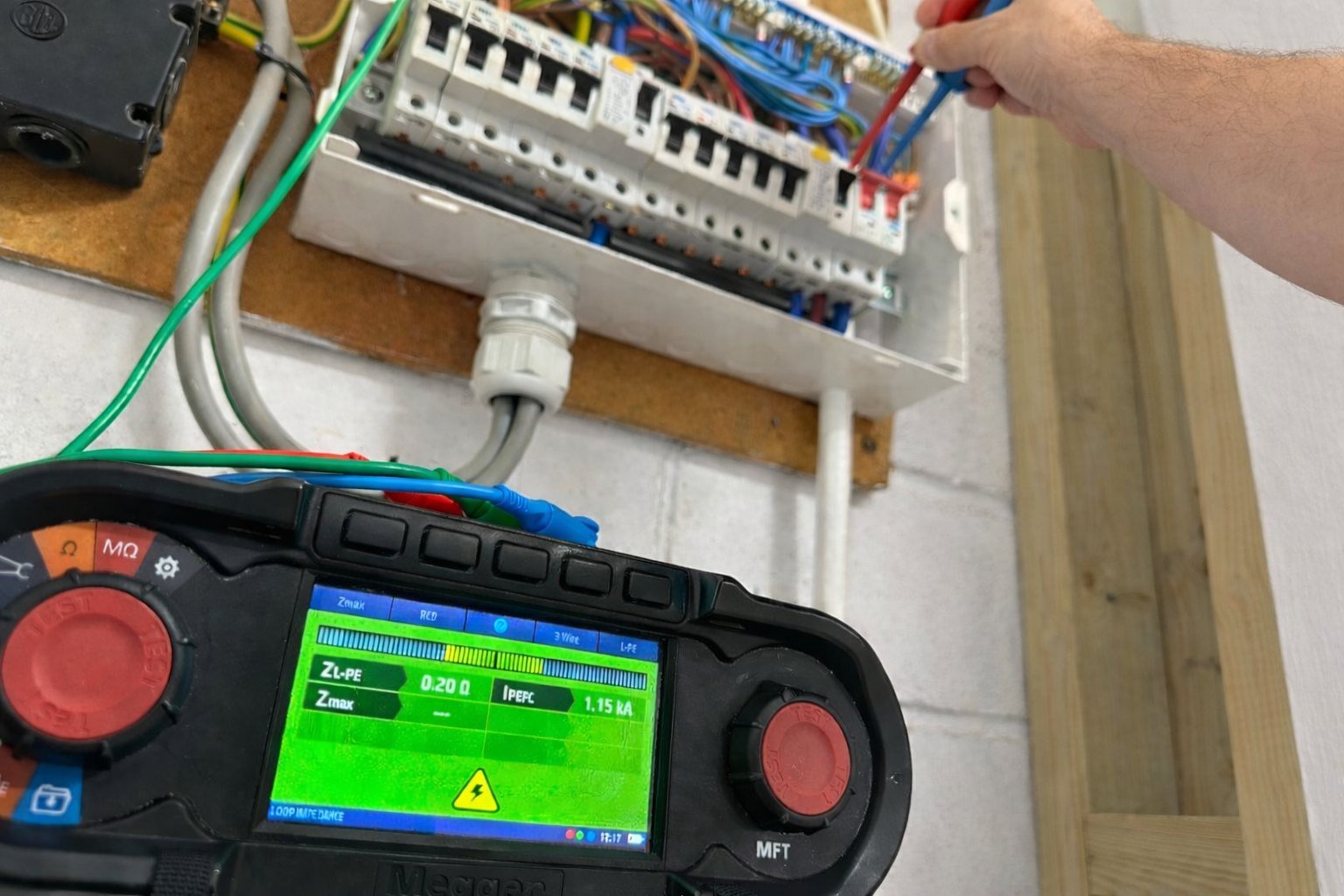
We test before we quote. If the readings say only the lighting circuits are failing, that is what we price, not the whole house.
About EICR testingFloors and walls need reaching
We need access to floorboards, skirtings and the walls being chased. Furniture moved to the middle and sheeted is usually enough, and we agree the order room by room so you are never clearing the whole house at once.
Talk through a rewireTwo to five days, power back each night
Most households stay put. We work room by room, restore power every evening, and energise completed circuits as we go. A full strip out of an empty property is quicker, but living in is entirely normal.
Rewire pricingChases filled, plaster and paint yours
Chases are cut with dust extraction and filled before we leave, and floorboards go back screwed down. Skimming and decoration usually sit with you or your decorator, and the quote states that plainly rather than leaving it to be discovered.
What a rewire includesRewiring, in depth
The two questions everyone asks: does it really need doing, and what is it like to live through. Honest answers to both.
How long does cable actually last?
Rubber insulated cable, common before the early 1960s, is the one that genuinely frightens us. The rubber dries, hardens and crumbles off the conductor at a touch, usually starting at light fittings where heat has baked it for decades. Lead sheathed and fabric covered systems are older still and give the same verdict.
Early PVC cable is a different story. Installed from the sixties onward, it often tests well after fifty years. The catch is what came with it: lighting circuits wired before the mid sixties frequently have no earth conductor at all, which rules out metal switches and fittings, and early installations often lack the capacity modern kitchens demand.
Age raises the question. Only the test readings answer it, which is why every rewire conversation with us starts with an inspection rather than a price.
Living through a rewire
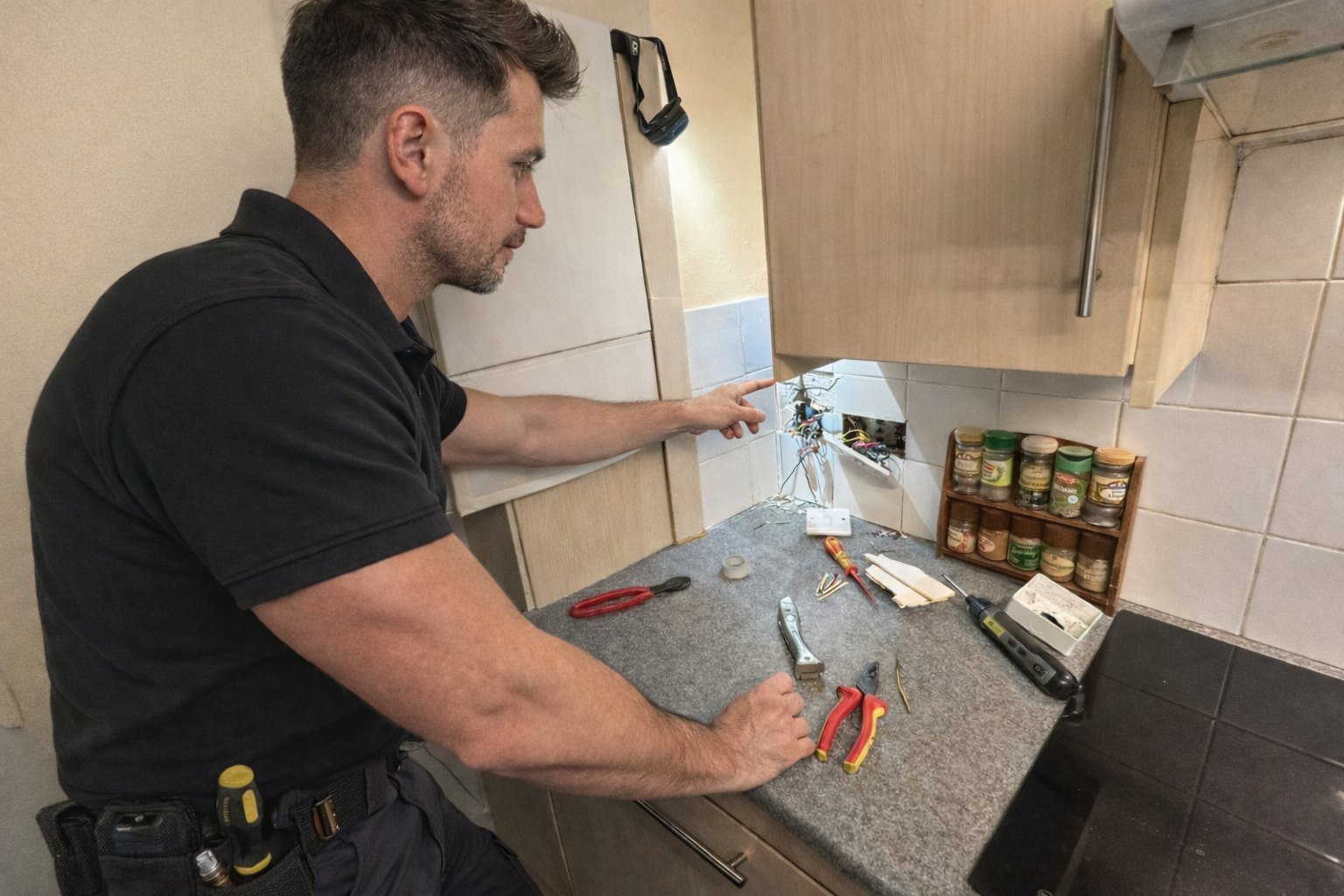
Done properly, a rewire is disruptive for days, not weeks, and the disruption is planned rather than discovered.
- We work room by room, so most of the house stays livable while one room is open.
- Power comes back on each evening, with completed circuits energised as we go.
- Floor coverings and furniture are moved and sheeted in an agreed order, and suspended floors are lifted carefully with boards refitted, not broken.
- New cable runs mean lifting floorboards and drilling the joists beneath. Holes go through the middle of the joist, inside the zones the building regulations allow, so the timber keeps its strength, and boards go back down screwed rather than nailed blind into a cable.
- Chases are cut with dust extraction, and filled before we leave. Skimming and decoration are usually the owner’s side of the line, and the quote says so plainly.
A typical rewire runs two to five days depending on the size of the property, the access and the floor construction, and the written quote states the number of days for your home before any work starts.
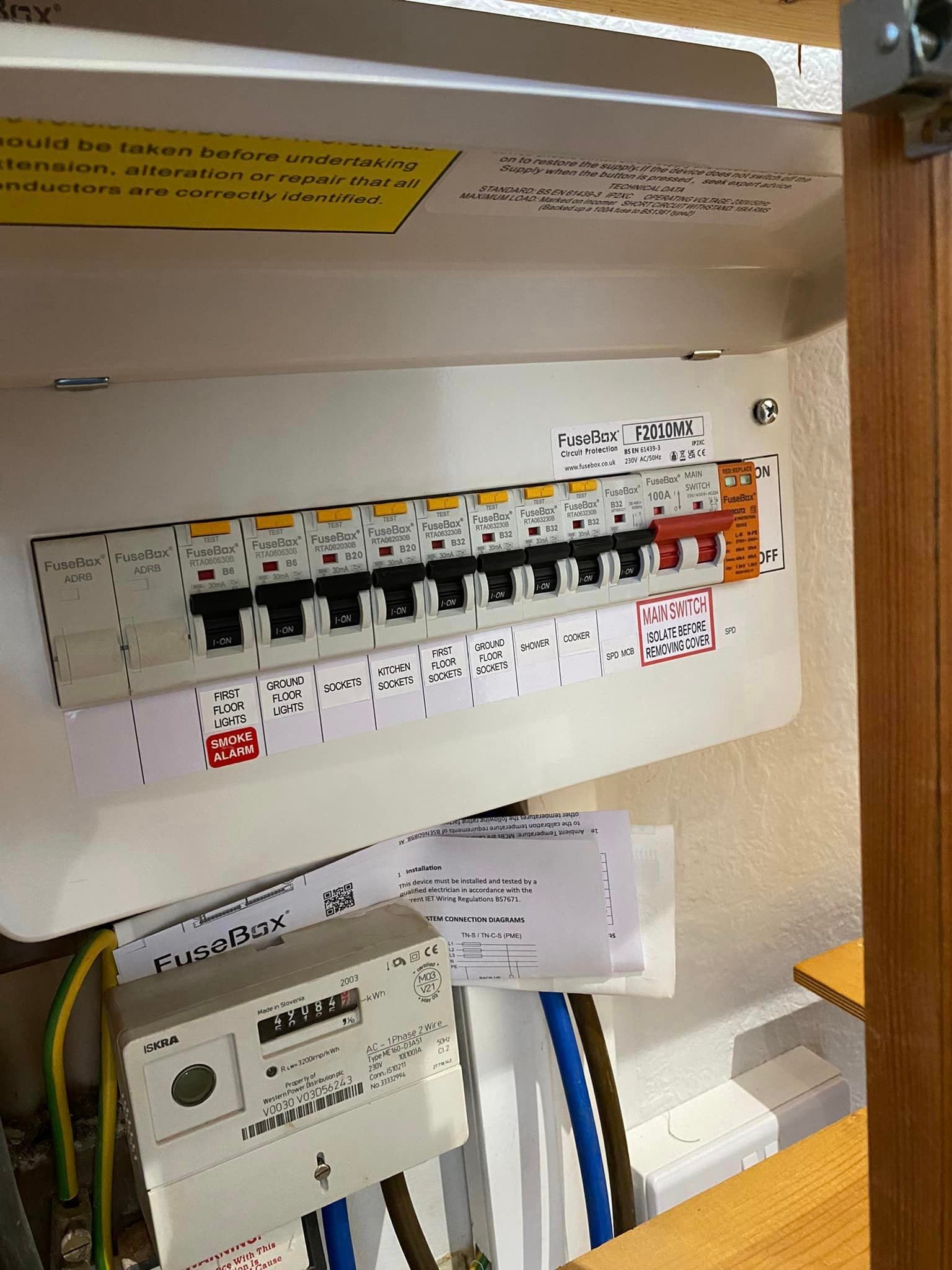
The circuits a full rewire puts in
A rewire is not one big circuit, it is a set of dedicated ones, each sized and protected for its own job. This is the standard set we design for a family home, adjusted to how you actually live in it.
Upstairs and downstairs sockets
Two separate circuits, wired as rings or radials to suit the layout and the load calculations, so a fault on one floor never takes out the sockets on the other.
Kitchen circuit
The hardest working room gets its own ring. Kettle, dishwasher, washing machine and worktop appliances draw from a circuit that does not share with the rest of the house.
Cooker circuit
A dedicated radial sized to the appliance, with its own switch beside the cooker. Induction hobs and double ovens pull far more current than a socket circuit should ever carry.
Shower circuit
An electric shower is often the biggest single load in the house, so it gets its own heavy cable and protective device, sized to the shower fitted with headroom for a more powerful replacement.
EV charger circuit
A dedicated way at the board ready for a 7kW charge point, wired and protected to the standard car chargers require. Even if the car has not arrived yet, the cable run costs far less during a rewire than after one.
Upstairs and downstairs lighting
Two lighting circuits, split by floor, so one fault never leaves the whole house dark on the stairs. Modern LED loads are small, but the separation is about safety rather than capacity.
Boiler circuit
The heating gets its own supply, so a tripped socket circuit in January does not take the boiler down with it, and the heating can be isolated on its own for servicing.
Smoke and heat alarm circuit
Mains powered, interlinked alarms on their own circuit with battery back up. When one alarm triggers, every alarm in the house sounds, wherever the fire starts.
How a rewire is planned
Test the existing installation
Readings decide the scope. You get the numbers, not just an opinion.
Walk the property together
We mark up positions for every socket and switch so nothing gets forgotten once the walls are open.
Fixed price and programme
A written price with a start date, the number of days on site, and what is excluded.
First fix and inspection
Cabling installed and tested before anything is covered up.
Second fix, test and certify
Accessories on, board energised, full test sequence, certificate issued.
Questions we get asked
Straight answers to the things people ask before they book. Anything else, the phone is quicker than a form.
Do we have to move out?
Not always. Most rewires are done room by room with power restored each evening, though a full strip out of a small flat is easier empty.
How long does a rewire take?
Most rewires take two to five days depending on the size of the property, the access, and whether the floors are solid or suspended. The quote states the number of days for your property before anything starts, and we hold to it.
Will you make good the plaster?
Chases are filled and floors reinstated. Skimming and decoration are usually excluded, and always stated clearly on the quote.
Can you rewire a flat with a shared supply?
Yes. We coordinate isolation with the freeholder or managing agent, and any work on the shared intake goes through the network operator.
Is a part rewire ever a false economy?
It can be, if the remaining cable is the same age and condition. The test results usually make the answer obvious.
My wiring is in the old red and black colours. Does that mean a rewire?
No. The harmonised brown and blue colours arrived in the mid 2000s, so old colours simply date the installation, they do not condemn it. Plenty of red and black wiring tests perfectly. What decides a rewire is the condition of the insulation and the readings, never the colour of it.
Do kitchens and bathrooms get special treatment in a rewire?
Yes, they are the two rooms where the regulations concentrate. Kitchens get dedicated circuits for the heavy appliances and enough socket capacity to stop extension leads breeding. Bathrooms are divided into zones that dictate what equipment may go where, with supplementary bonding or RCD protection tying the metalwork together safely.
Can you take over a rewire someone else started?
Yes, and it happens more often than you would think. We survey and test what exists before quoting, and we are straight with you about certification: we can only certify work we have installed or fully inspected, so some concealed sections may need opening up to be signed off honestly. That costs less than living with wiring nobody will vouch for.
Rewiring and part rewires across Sussex
One emergency line covers every town below. Yours has a page of its own, with local response targets and the postcodes we reach.
Other things we fix

24 hour emergency call-outs
One number, answered by a person, day or night. If you have no power, a burning smell from a socket, or a fuse board that will not reset, this is the emergency electrician call-out you want. We cover Lewes and the rest of Sussex around the clock, including weekends and bank holidays.
Read more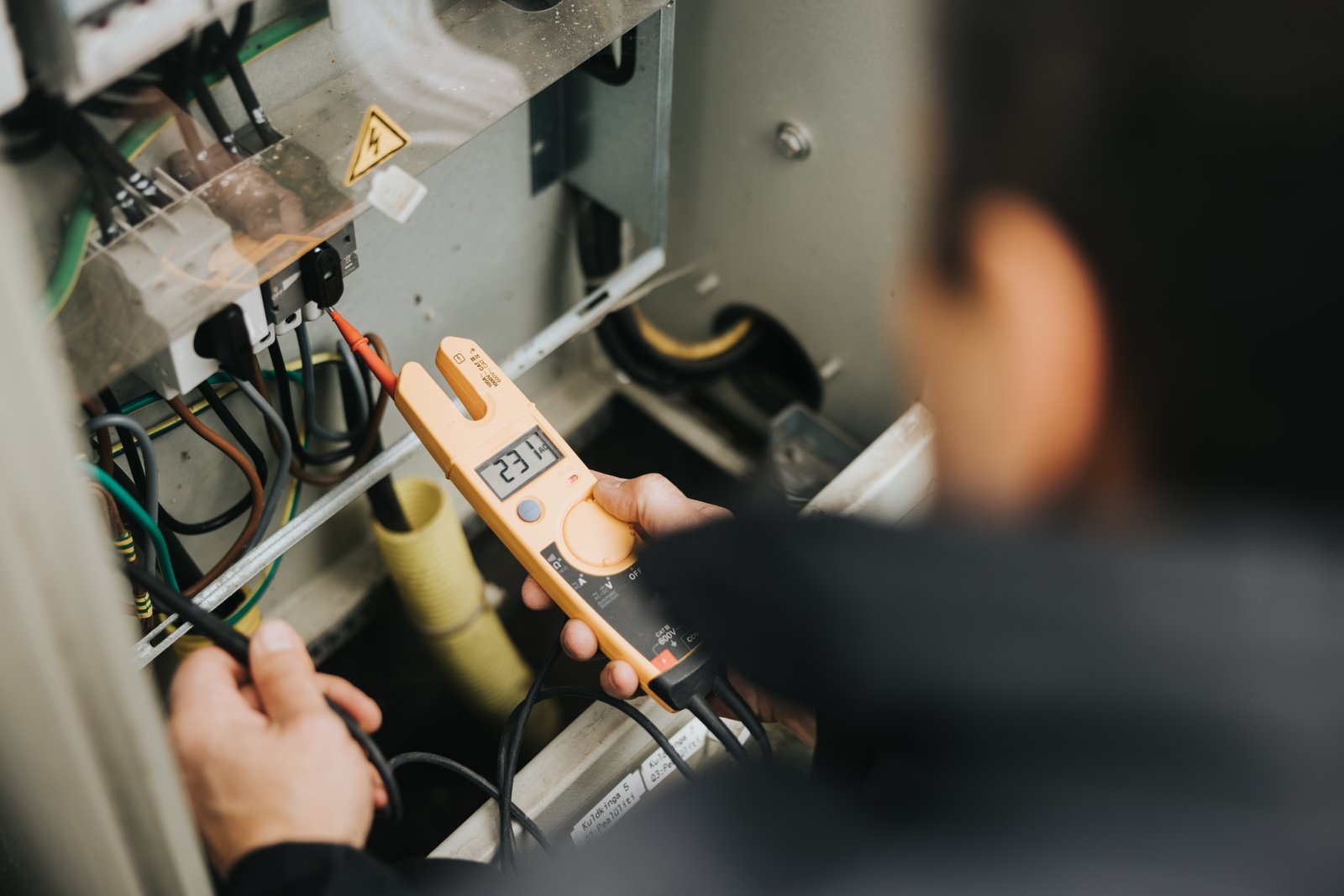
Fault finding and repairs
An RCD that keeps tripping, sockets not working, lights flickering, or power dropping out for no obvious reason. Intermittent electrical faults are the ones that cost people money. We use continuity, insulation resistance and RCD testing to prove the cause rather than guess at it, then repair it once and retest.
Read more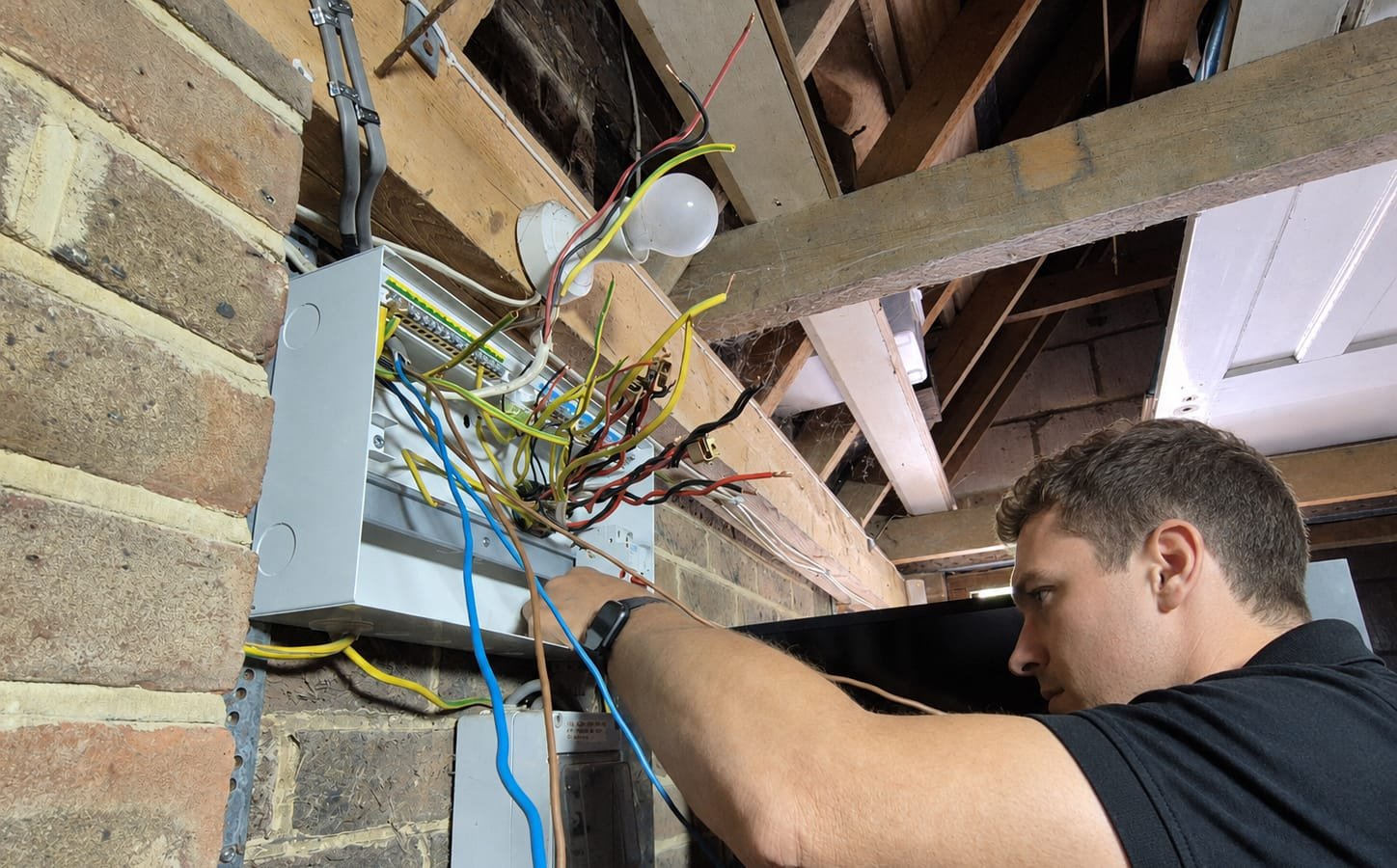
Fuse board and RCD upgrades
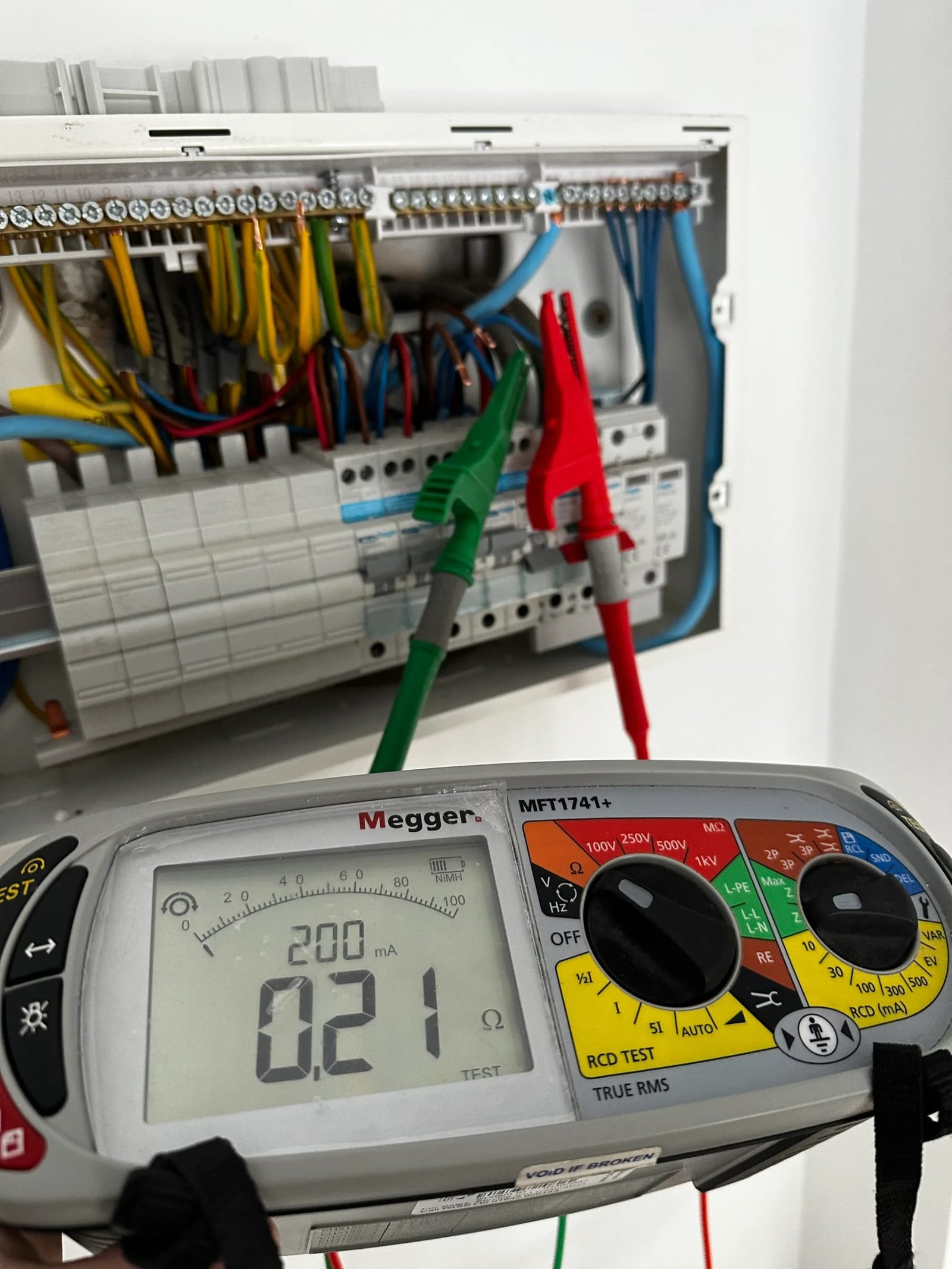
Fuse box replacement and consumer unit upgrades, from old rewireable fuses to a metal board with an RCBO on every circuit. A modern board protects each circuit on its own, so one faulty appliance no longer takes the whole house out. Tested, certified and notified under Part P, usually in a day.
Read moreRubber cable, no earth on the lighting, or readings falling away? Let us test it.
Trusted emergency electricians in Sussex
We have been covering Sussex for 25 years. In that time the wiring regulations have moved through several editions and consumer units have changed shape more than once, while the faults themselves have stayed much the same: loose connections running hot, tired cable, and protection that was never fitted in the first place.
That experience is the difference between guessing and knowing. It is also why we can usually tell you on the phone whether a fault needs a van tonight or a booking on Tuesday, which saves you the out of hours rate more often than you might expect.
TO CONFIRM: add the year you started trading, your scheme registration number and your public liability cover. Only list credentials you can evidence.