

24 hour emergency call-outs
One number, answered by a person, day or night. If the power is off or something is burning, this is the page you want.
What counts as an electrical emergency
Not every electrical problem needs an electrician at midnight. These ones do:
- A total loss of power to the property when the street still has supply
- A burning or fishy smell, scorch marks, or heat coming from a socket, switch or fuse board
- Any exposed live conductor, a broken accessory, or water reaching wiring or a consumer unit
- An RCD or main switch that will not stay on, leaving you without light or heating
- A shock or tingle from a tap, appliance or metal pipework
If you have had a shock, or you can see or smell burning, switch the circuit off at the fuse board first and call us from outside the room.
Call 01273 095564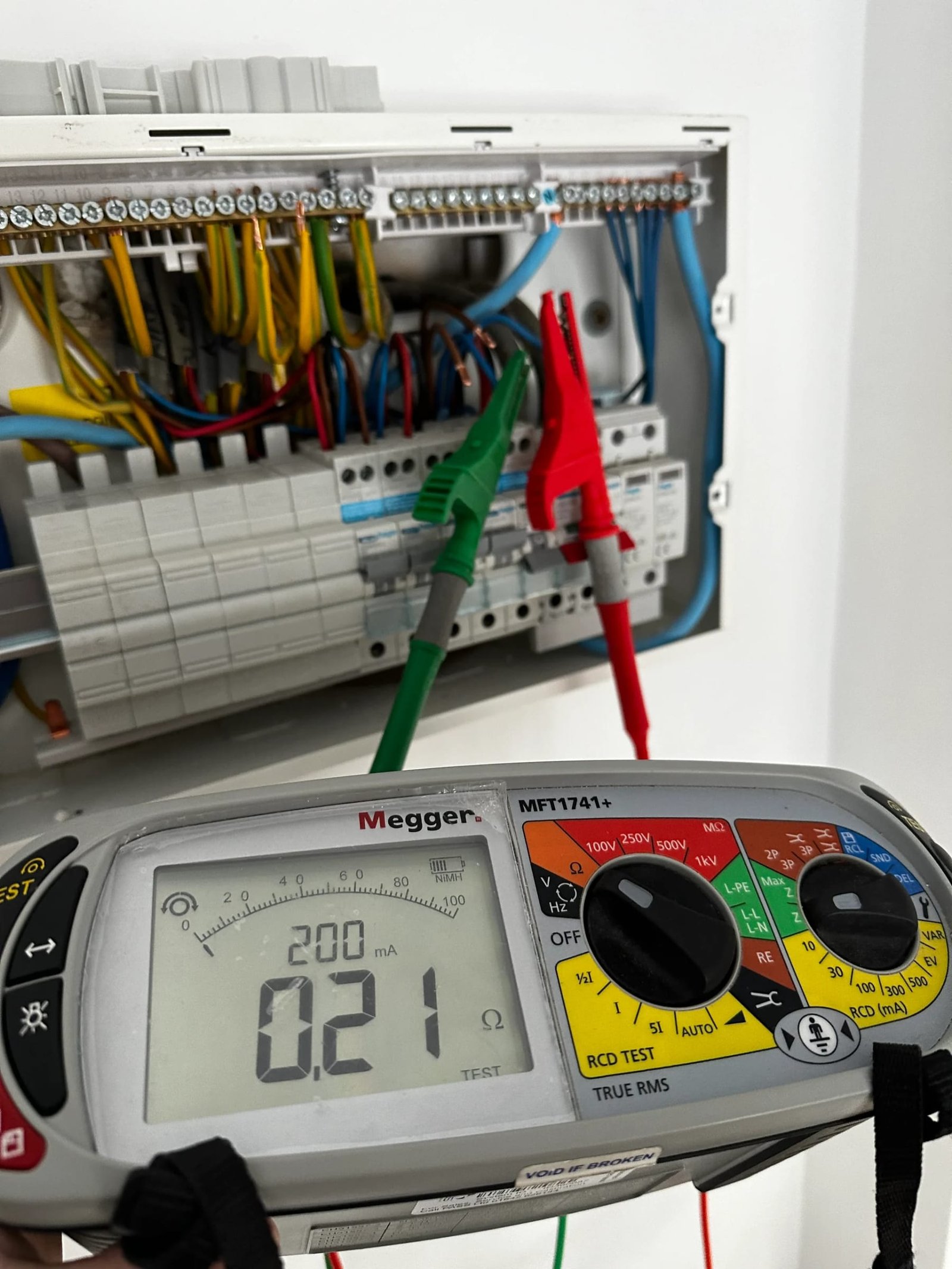
The electrical emergencies we attend
Not every electrical problem needs an electrician tonight, and we will tell you honestly which yours is. These are the faults we treat as genuine emergencies, day or night.
Total loss of power
The whole property is dark while the street still has supply. Usually the main switch, the RCD, the meter tails or the supplier cut-out, and each needs a different answer.
Partial loss of power
Some circuits alive, others dead. Often a single tripped device that will not reset, a failed RCBO, or a broken neutral affecting part of the installation.
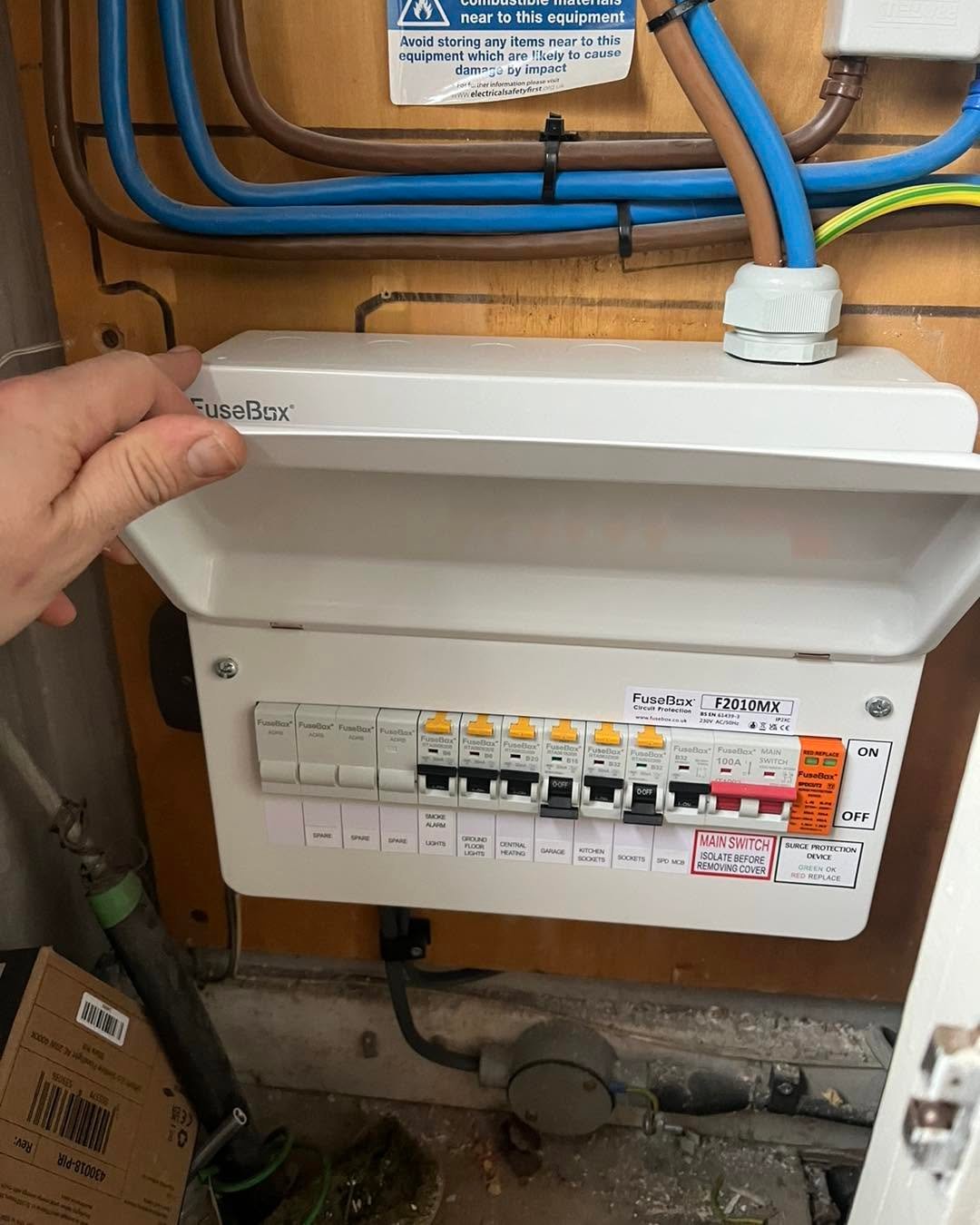
RCD, RCBO or MCB tripping
Protection that will not stay on is protection doing its job. Something is leaking to earth or drawing more current than the circuit allows, and it needs finding rather than resetting.
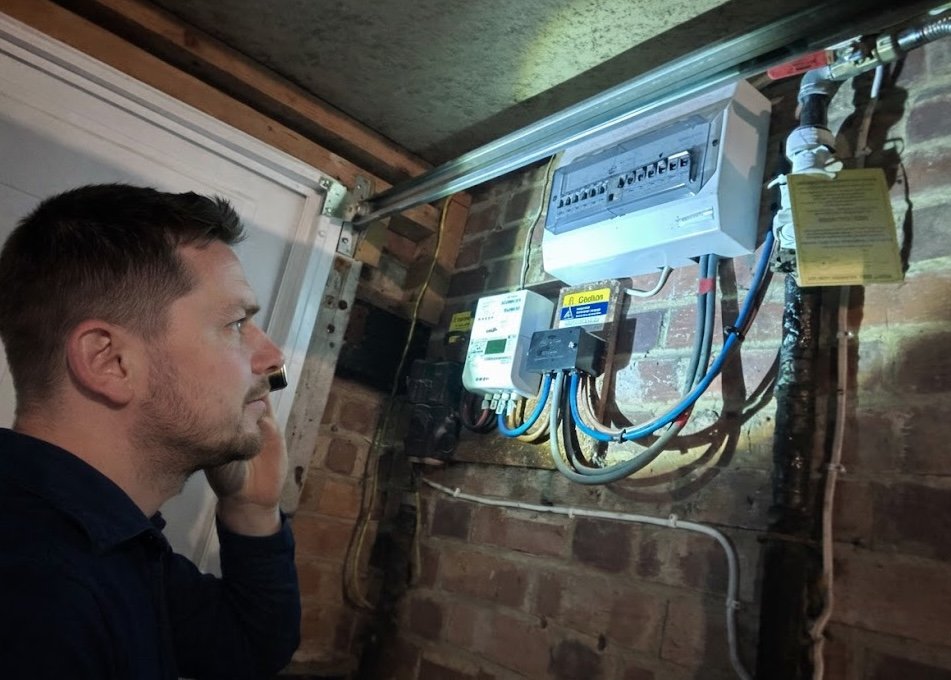
Burning smells or buzzing
A fishy or burning smell, crackling, or a buzz from an accessory or the board means arcing at a loose connection. This is the fault most likely to start a fire.
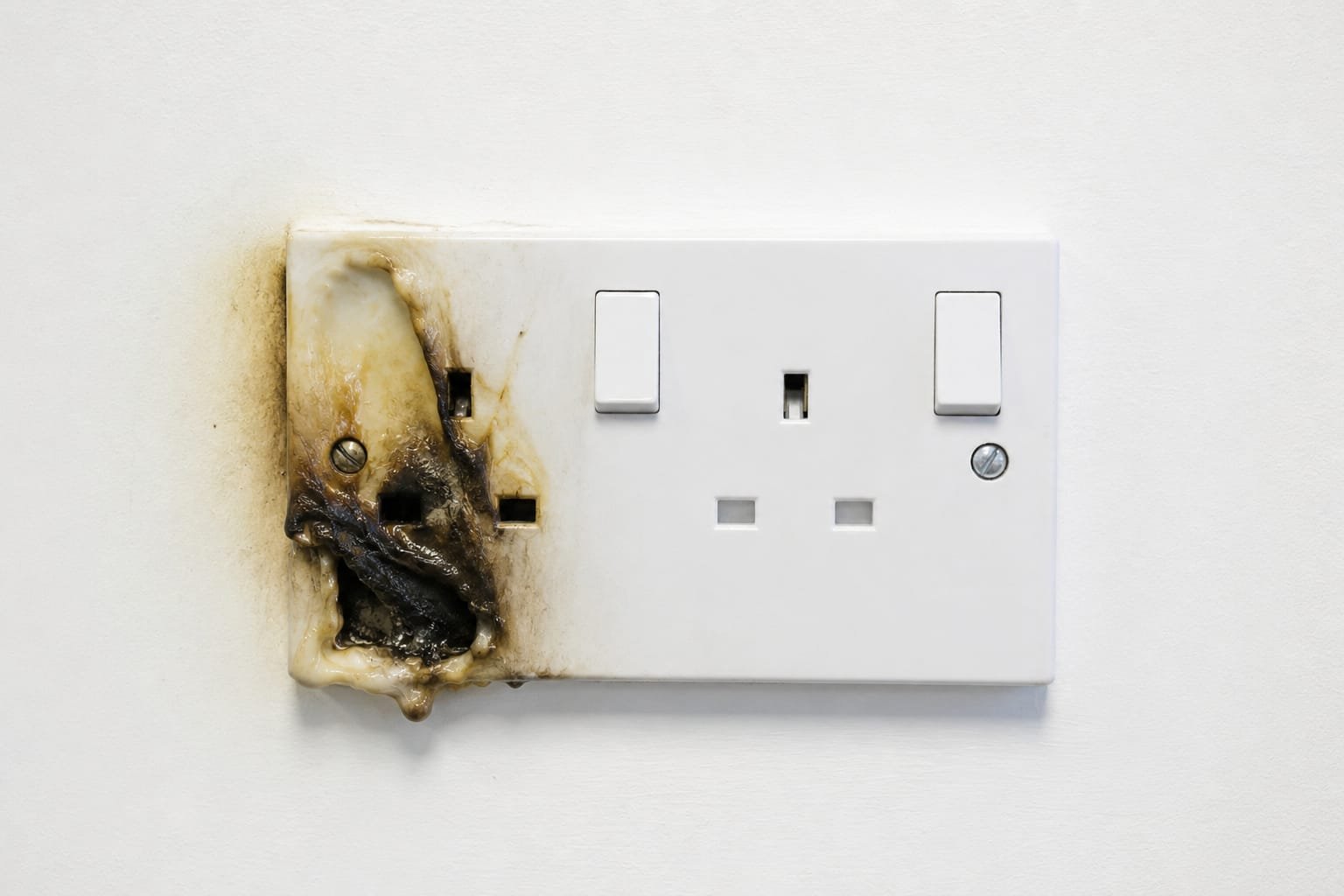
Melted or burnt sockets
Scorch marks, discolouration or a socket warm to the touch. The heat has already cooked the terminals, and the damage spreads until the connection is remade properly.
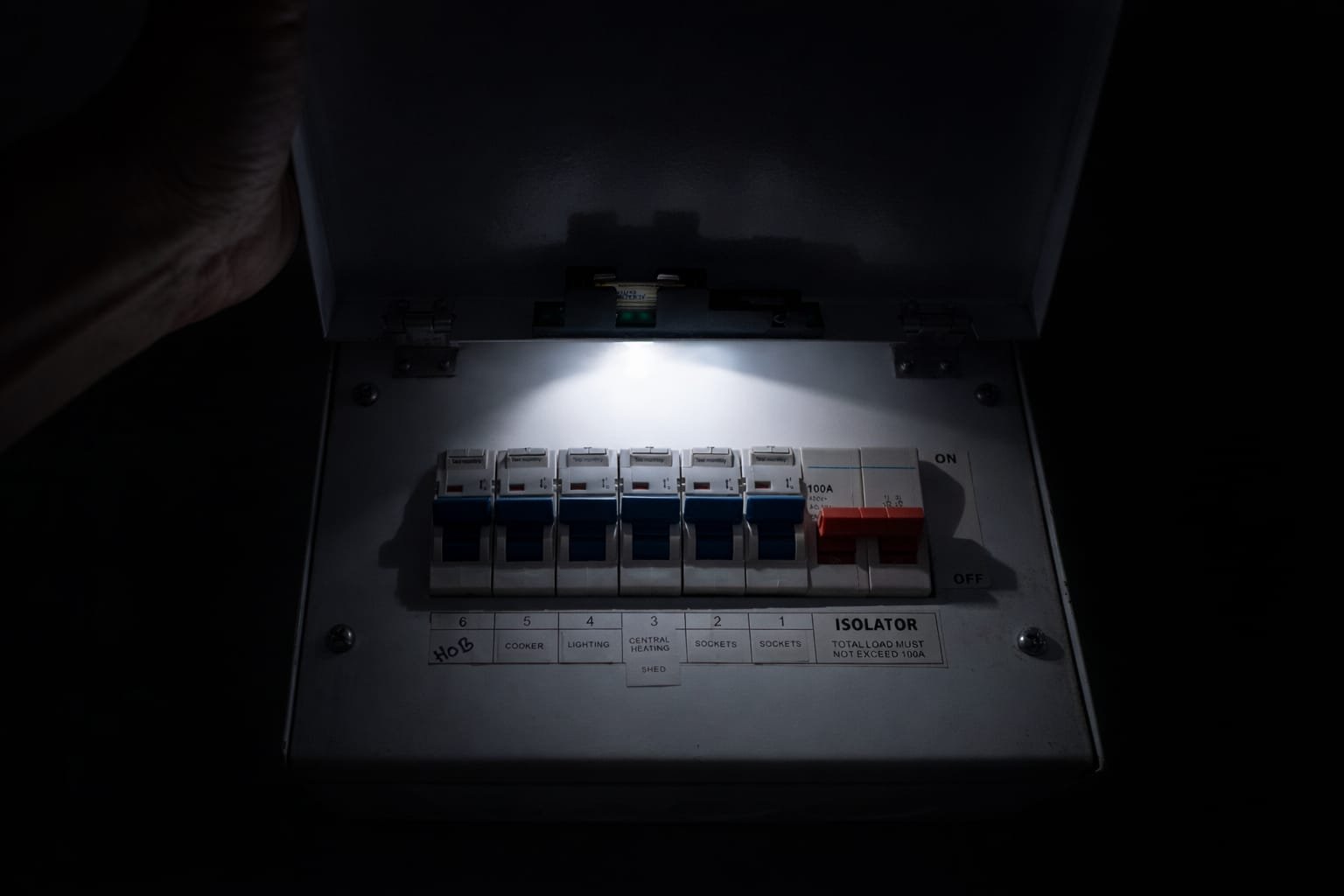
Water ingress and leaks
Water reaching wiring, accessories or the consumer unit. Nothing affected goes back into service until it has been dried and tested, whatever the plumber has already fixed.
Exposed or damaged cables
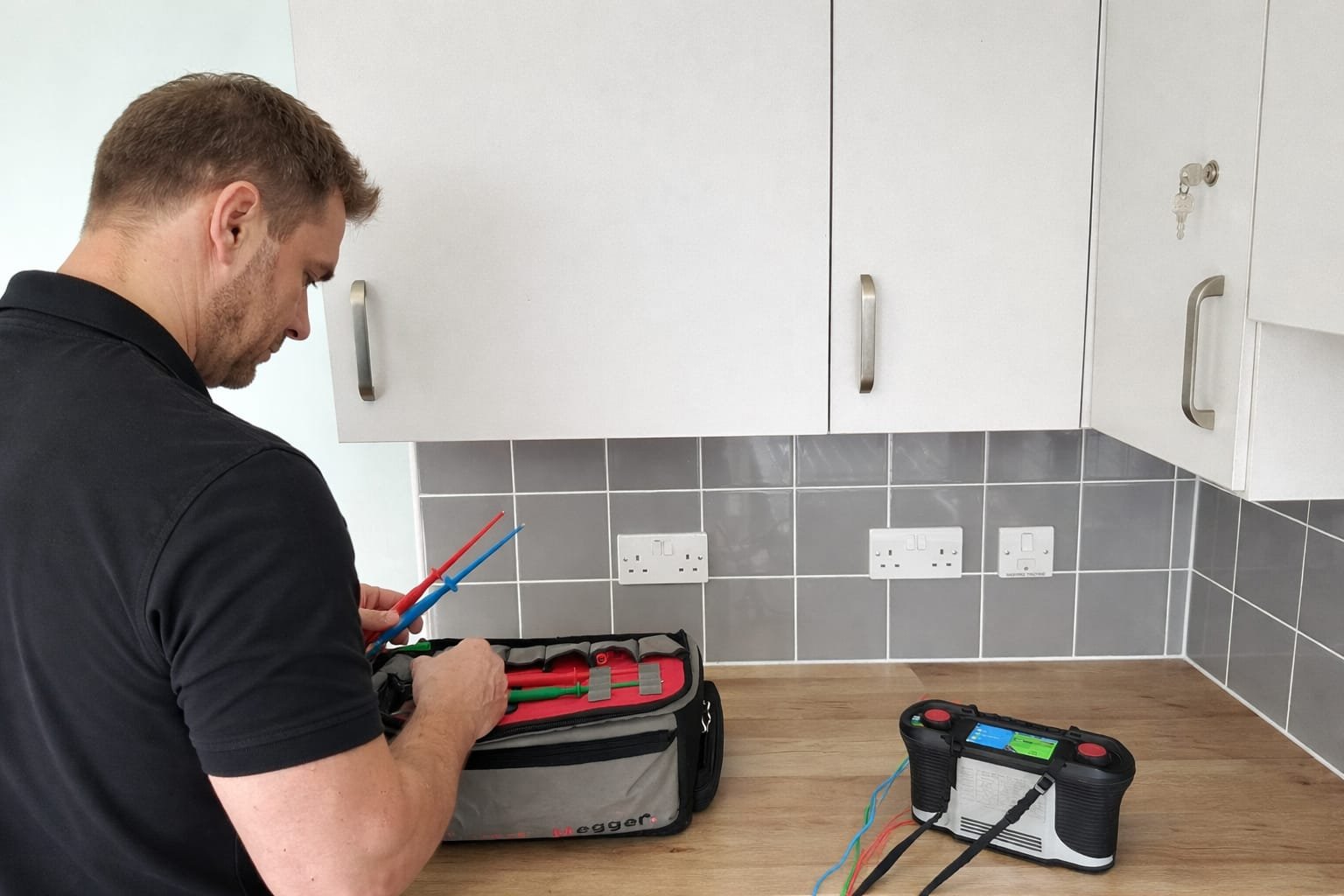
Cable pulled out of an accessory, damaged during other trades, or chewed by rodents. Anything with reachable live parts is isolated and made safe on arrival.
Faulty circuits and appliances
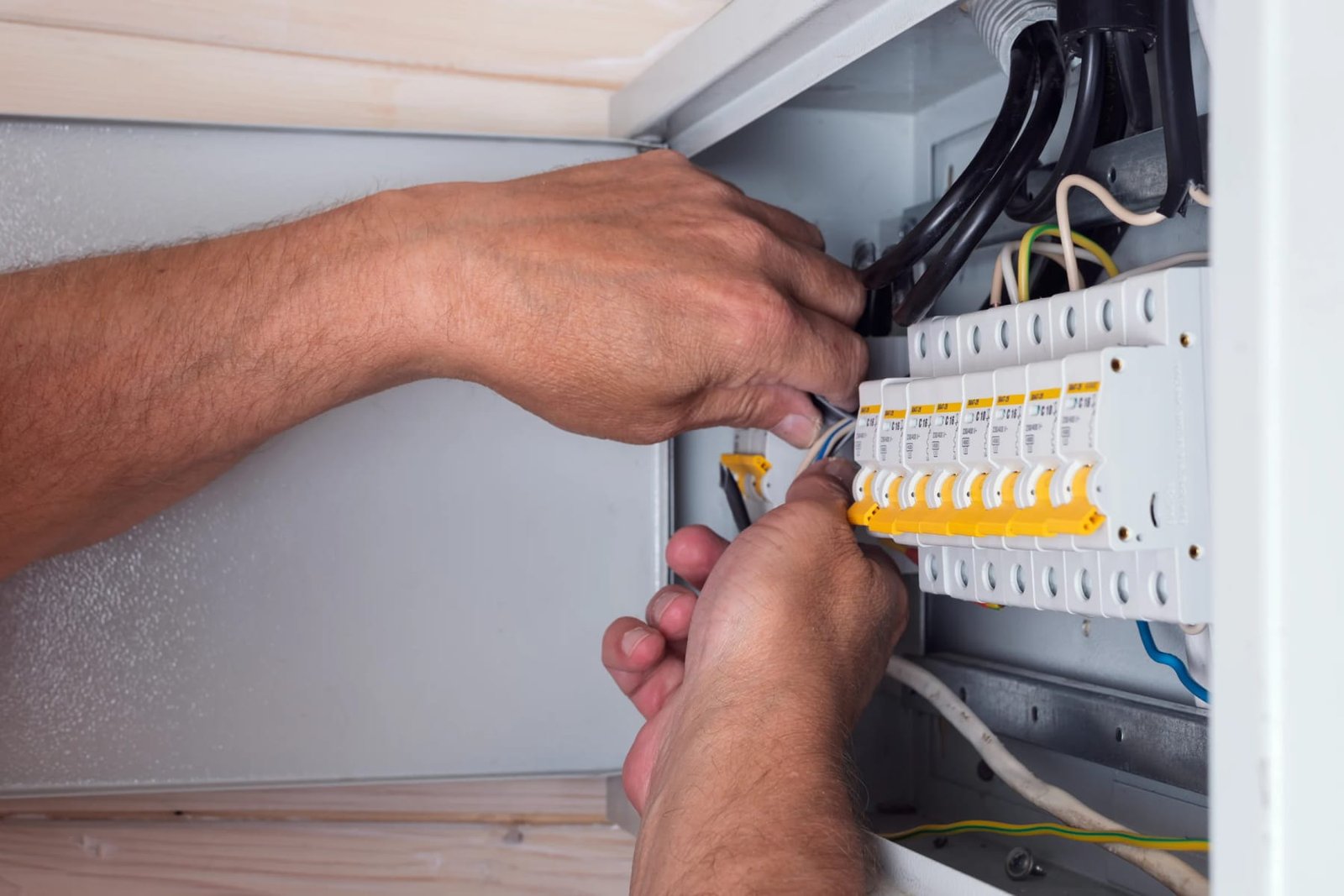
A circuit that trips whenever one appliance runs, or an appliance giving shocks. We separate the installation fault from the appliance fault so you are not replacing the wrong thing.
What to do before we arrive
Five things that keep the situation from getting worse in the time it takes a van to reach you.
Isolate the affected circuit
Switch off the circuit at the consumer unit, or the main switch if you cannot identify it. If the board itself is hot or smells, leave it and keep clear.
Stop using anything suspect
A socket that has scorched or an appliance that has given a shock stays unplugged and unused, even if it still appears to work.
Check the street before assuming
If neighbours are dark too it is a network fault. Call 105 free and the distribution operator handles it at no cost to you.
Ventilate and stay out
If there is a smell of burning, open a window and keep the room clear. Never throw water at anything electrical.
Find a torch, not a candle
Phone torches are safer than candles in a dark house, especially with children or pets, and you will need one to read the fuse board when we ask.
What an emergency call-out includes
A real conversation first
We talk you through making the installation safe before we set off, so nothing gets worse while you wait.
Made safe on the first visit
The priority is isolating the fault and getting the rest of the property back on, even if the full repair needs a return visit.
Test results, not guesses
Insulation resistance, earth fault loop and RCD timings measured with calibrated instruments and written down.
A price before we start
You get the call-out charge and the likely repair cost up front. No work goes ahead until you say yes.
Parts on the van
RCBOs, MCBs, accessories, cable and connectors so most faults are finished the same visit.
Paperwork that follows
A minor works or installation certificate for the repair, emailed within TO CONFIRM working days.

Built for the middle of the night
Most electrical firms do emergencies as a sideline. We are set up the other way round: the line is answered by a person at 3am, the vans carry the protective devices and accessories that fix most faults on the first visit, and the diary always keeps room for the job that cannot wait.
That is also why we are honest about urgency. If your fault can safely wait until morning, we say so, and you pay the daytime rate instead.
See call-out rates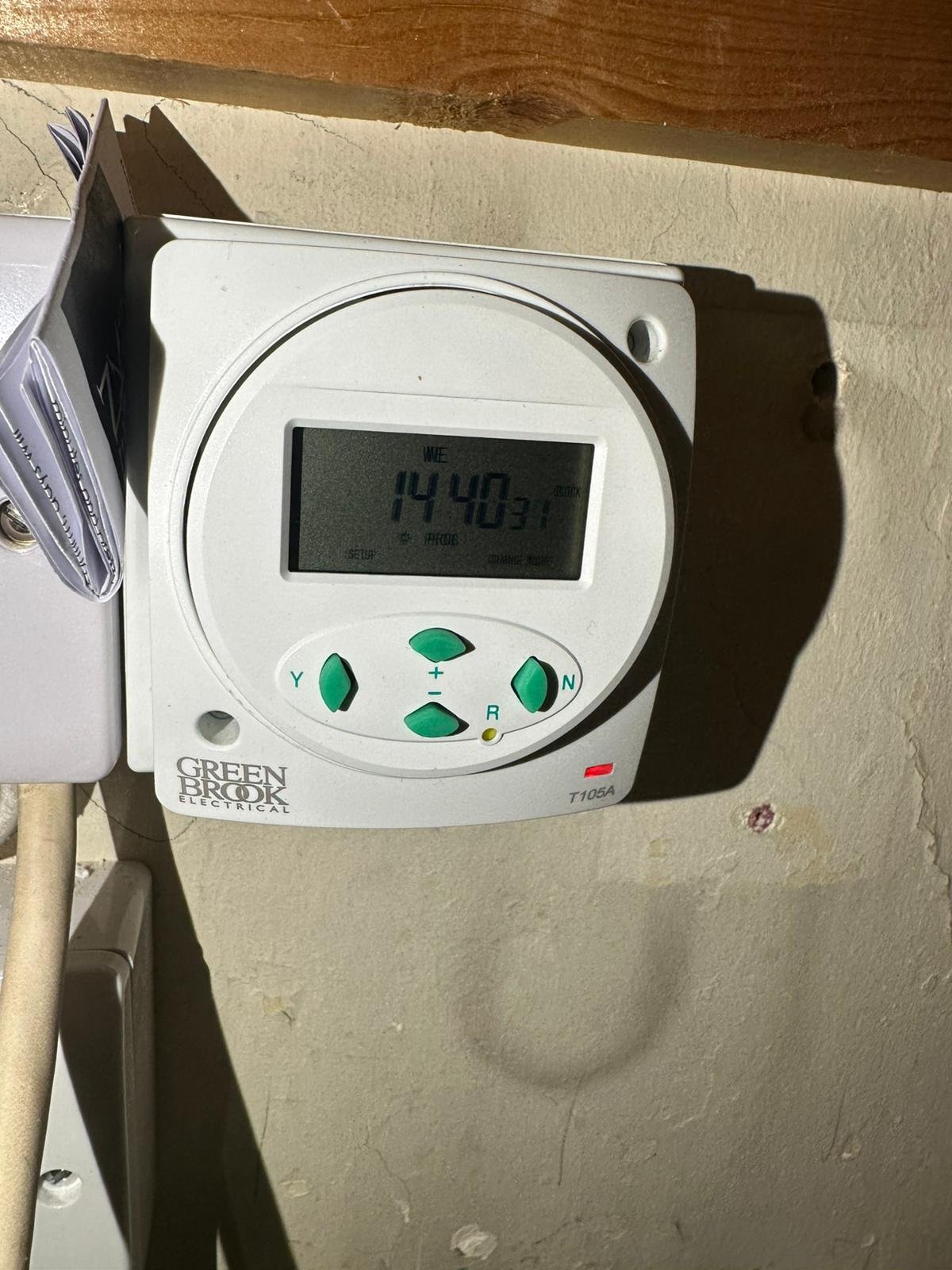
Out of hours, priced up front
The night rate is quoted on the phone before a van moves. No work starts until you have said yes to a number.
How we charge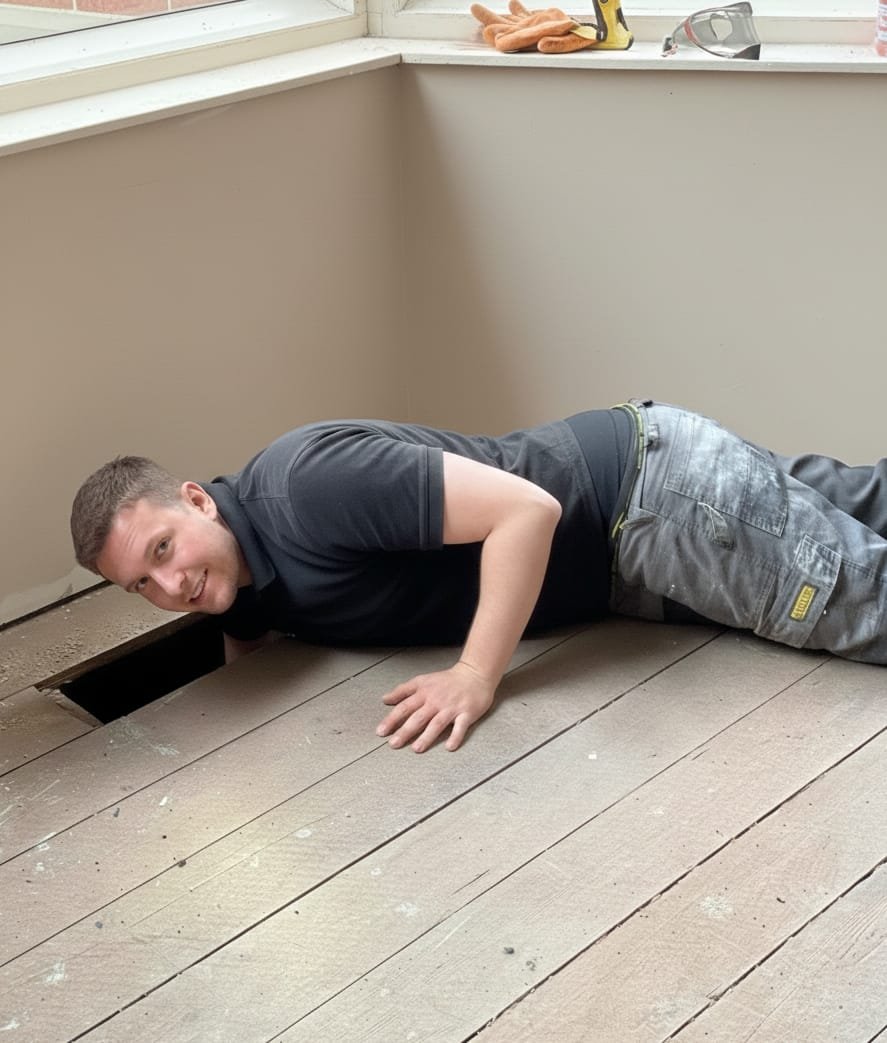
Isolate it, then leave it alone
Switch that circuit off at the board, or the main switch if you cannot identify it. Do not pull a hot plug out by hand, do not use the socket again, and open a window if the smell is strong. If you can see smoke or flame, call 999 first.
What causes scorchingDo not energise anything wet
A leak from above tracks a long way through a ceiling before it appears. Isolate at the main switch if the board is dry and safe to reach, keep out of standing water, and let us test every affected circuit before anything is switched back on.
How we test after a leakTreat it as a fault, not bad luck
Get medical advice for the person first. Then isolate the circuit and stop using it. A shock means current found a path it should never have, and the installation needs testing before that circuit goes back into service.
About inspection and testingEmergency electrics, explained properly
The more you understand about what is happening behind the fuse board, the better your decisions are at two in the morning. This is the detail we wish every caller already knew.
Why some faults cannot wait until morning
An arcing connection is the one that frightens electricians. Once a loose terminal starts to spark, the heat oxidises the copper, the oxide adds resistance, and the extra resistance makes more heat. The cycle only accelerates, and it is happening inside a wall or an enclosure where nobody can see it. That is why a burning smell gets a van at any hour.
- A burning or fishy smell from any accessory or the fuse board
- Anyone feeling a shock or tingle from an appliance, tap or pipework
- Water reaching wiring, accessories or the consumer unit
- Exposed live parts a child or pet could reach
The same urgency does not apply to a single dead socket or a lamp that will not light. Half of being good at emergency work is telling people honestly when it is not one.
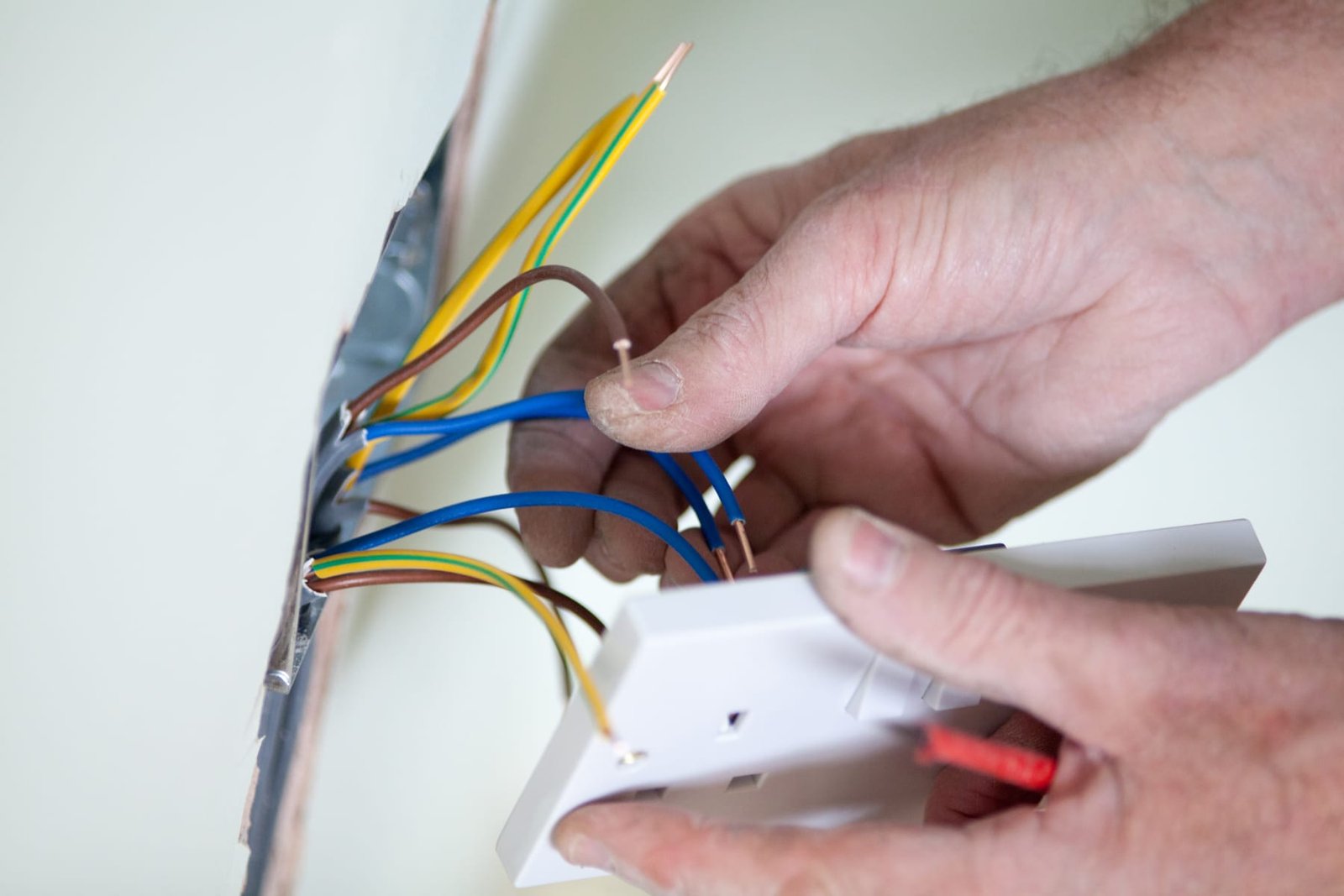
What is on the van, and why it matters
An emergency electrician without parts is just a diagnosis service. Our vans carry RCBOs and MCBs to suit the common board makes, a range of sockets, switches and pendants, cable, glands and connectors, plus a calibrated multifunction tester and fused test probes for safe live working.
The calibrated instrument matters more than the spares. Insulation resistance, earth fault loop impedance and RCD trip times are measurements, not opinions, and the certificate we leave behind records them. When the numbers are written down, the next person to open that board knows exactly what was found, fixed and proved.
It is the difference between a repair that is finished on the first visit and a fault that keeps a household waiting for parts a second night.
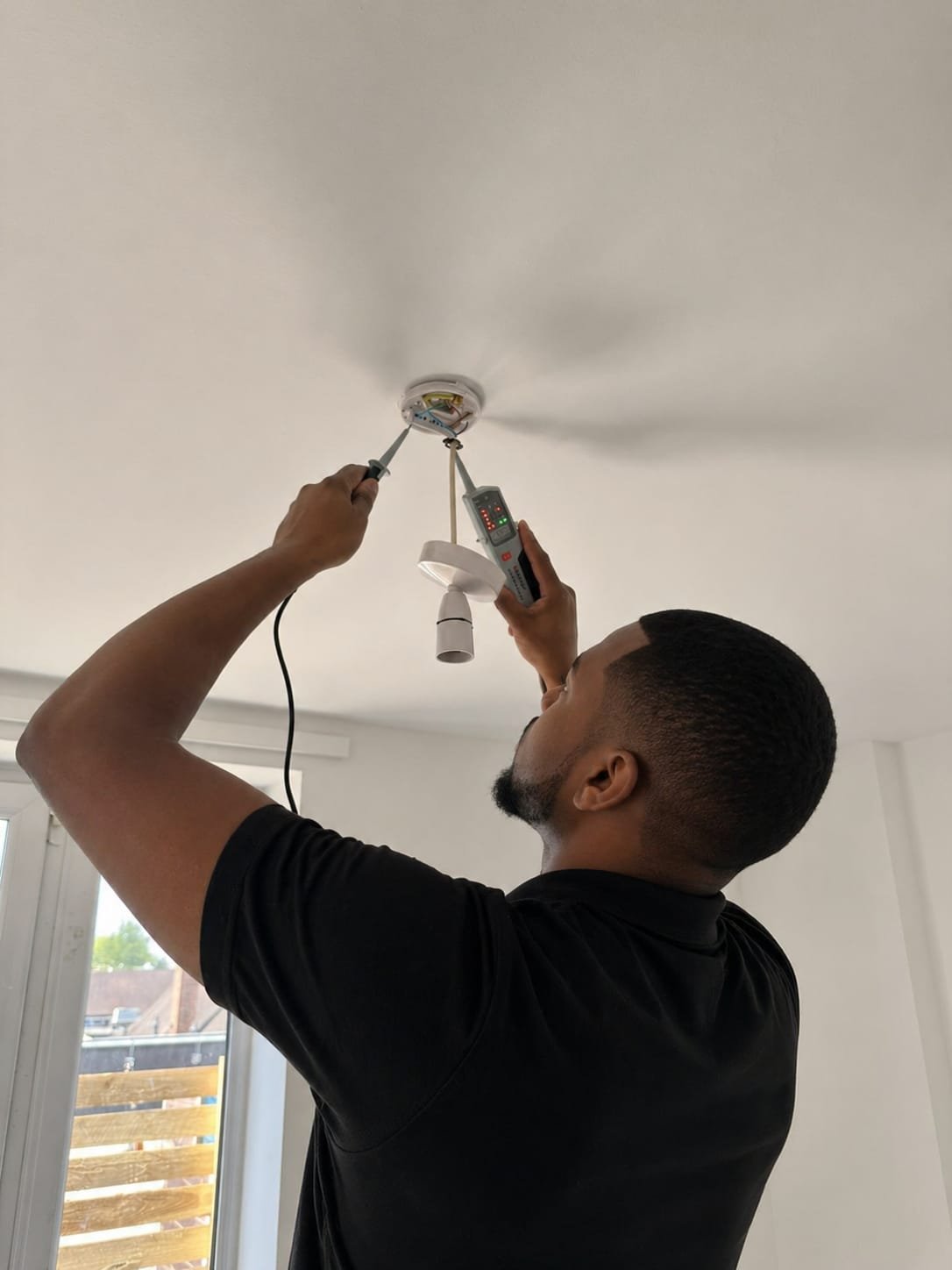
What happens after you call
You call, we answer
The emergency line at 01273 095564 is answered around the clock. You speak to someone who can tell you what to switch off.
We make you safe over the phone
Isolate the circuit, keep away from the affected area, and open windows if there is a smell of burning.
An electrician is dispatched
You get a name and an arrival window. Our target in the core Sussex patch is 60 minutes for a total loss of power. TO CONFIRM
Fault traced and proved
We split the installation down circuit by circuit and test until the fault is located, rather than swapping parts and hoping.
Repaired and certified
The repair is completed, retested, and the results recorded on the certificate that follows by email.
What a call-out looks like
Three of the faults we are called out to most, written the way we work through them on site.
Illustrative examples of work of this type, written to show how a job runs. They are not records of individual customers.
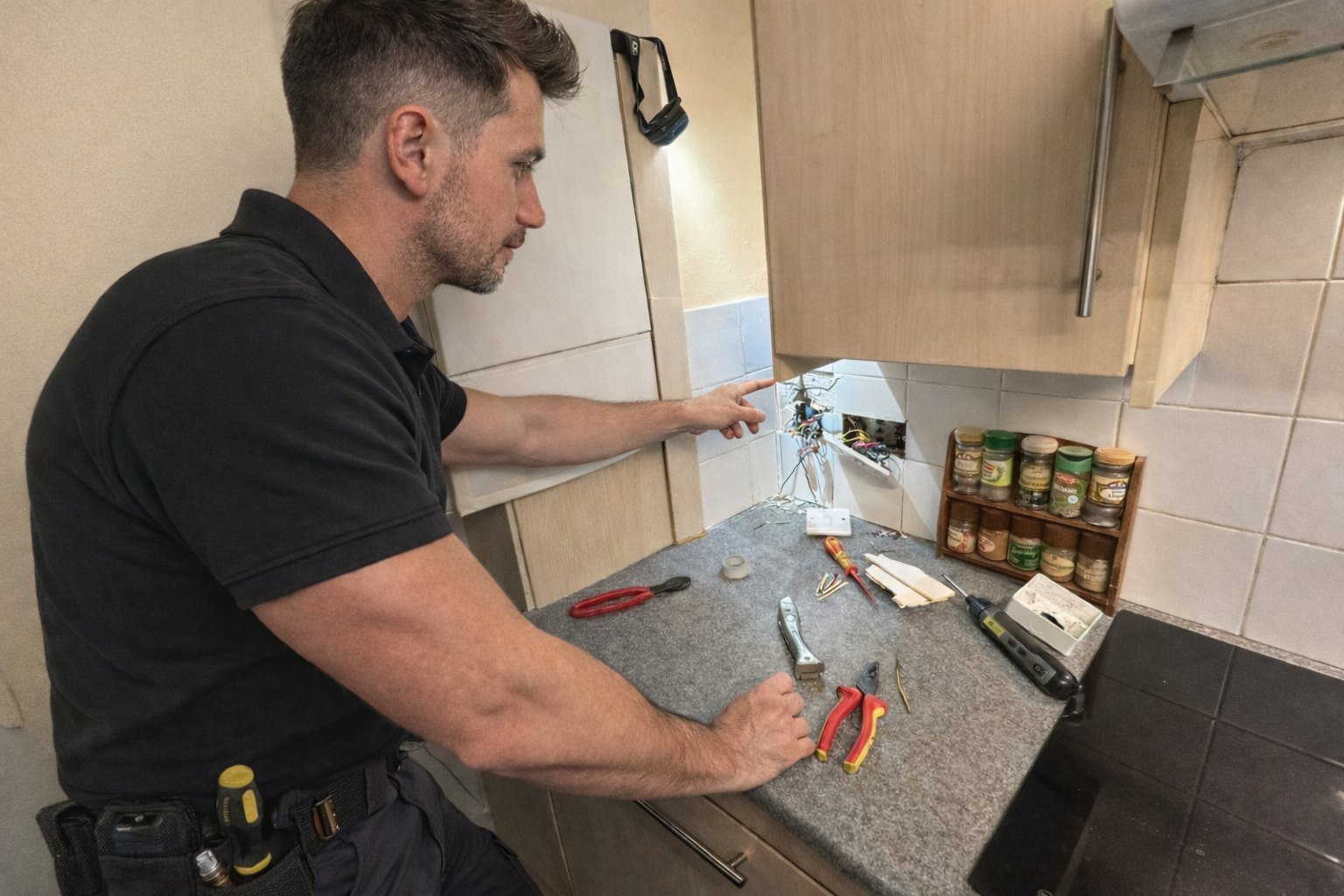
Total loss of power with the street still lit
Symptom: Everything goes off at once, the neighbours are unaffected, and the main switch will not stay on when it is reset.
What the testing shows: The board is split down circuit by circuit. Insulation resistance on the shower circuit reads close to zero between line and earth, which is the circuit holding the main switch off.
What we do: The faulty circuit is isolated and locked off so the rest of the property comes back on the same night, the damaged cable is replaced on the return visit, and the circuit is retested before it goes back into service.
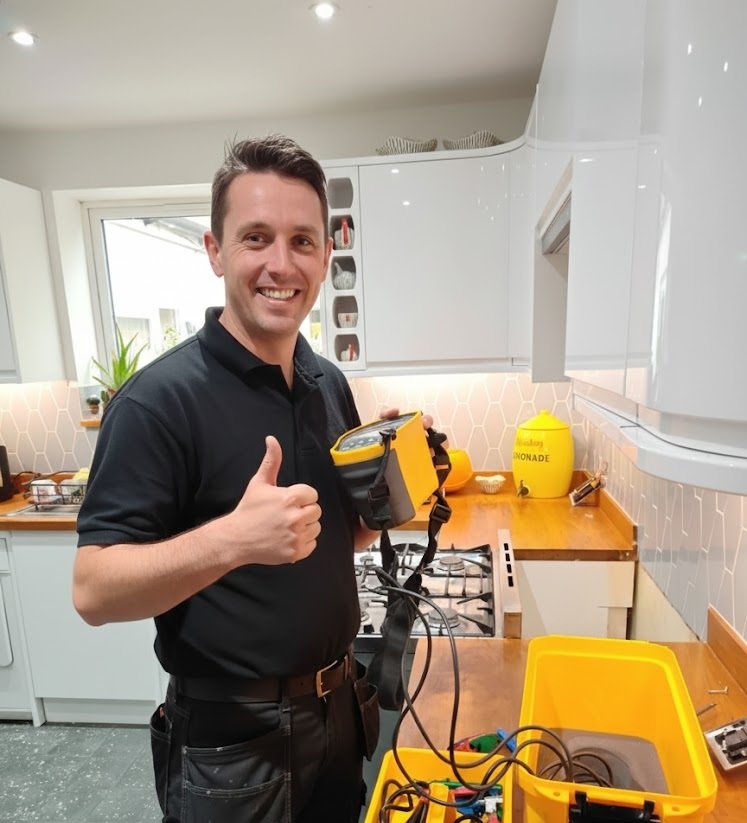
Burning smell from a socket outlet
Symptom: A fishy or burning smell near a worktop socket, with the faceplate warm to the touch and the socket still in use.
What the testing shows: The accessory shows heat damage at the line terminal, with discolouration running back into the conductor. That is arcing at a loose connection rather than an overloaded circuit.
What we do: The circuit is isolated on arrival, the conductors are cut back to sound copper, the accessory is replaced, the circuit is retested and a minor works certificate is issued.
RCD dropping out in the small hours
Symptom: The RCD trips repeatedly overnight and resets fine in the morning, usually after wet weather.
What the testing shows: Leakage is measured circuit by circuit rather than guessed at. The garden lighting circuit carries most of it, and water has reached a junction box outside.
What we do: The outdoor circuit is disconnected to get the rest of the property stable, the junction is replaced with a properly rated enclosure, and the circuit is retested before it is put back on.
How emergency charging works
The call-out covers travel and the first hour on site, which is where the diagnosis happens. Anything beyond that is agreed with you before it starts.
| When you call | What it covers | From |
|---|---|---|
| Weekdays, 8am to 6pm | Call-out plus the first hour on site | £95 |
| Evenings, 6pm to 10pm | Call-out plus the first hour on site | £140 |
| Overnight, 10pm to 8am | Call-out plus the first hour on site | £180 |
| Weekends and bank holidays | Call-out plus the first hour on site | £165 |
| Additional time | Charged in half hour blocks after the first hour | £60/hr |
| Parts | Charged at cost, itemised on the invoice, agreed before fitting | Varies |
TO CONFIRM: every figure above is indicative until you replace it with your own pricing. Prices exclude VAT unless stated.
Qualifications, registration and insurance
Every electrician attending an emergency is qualified to BS 7671, the 18th Edition of the wiring regulations, and carries a calibrated multifunction tester with in date certification. Domestic notifiable work is registered under Part P of the Building Regulations, so the compliance paperwork follows the job automatically.
Calibration matters more than it sounds. An instrument that has drifted gives readings that look convincing and prove nothing, which is why the calibration date is on the certificate alongside the results.
TO CONFIRM: add your scheme registration number, public liability cover and the name and qualifications of the electrician who reviewed this page. Only list credentials you can evidence.
Questions we get asked
Straight answers to the things people ask before they book. Anything else, the phone is quicker than a form.
Do you charge more at night?
Out of hours work carries a higher call-out rate than a daytime booking. The rate is quoted before we set off, so there is never a surprise on the invoice. TO CONFIRM: set your daytime and out of hours rates on the prices page.
My whole street is dark. Should I call you?
No, that is a network fault. Call 105 free from any phone and your distribution network operator will handle it. We only charge for a visit if the fault turns out to be inside your property.
Can you work on a fuse board with no labelling?
Yes. Part of the job is proving which circuit is which and labelling the board properly before we leave.
Will you work in a commercial unit or a shop?
Yes. Small commercial, offices, salons and retail units are all handled from the same emergency line.
What if the repair needs parts you do not carry?
We make the installation safe, get the unaffected circuits back on, and book the return visit before we leave.
I felt a tingle from a tap or an appliance. Is that an emergency?
Yes, treat it as one. A tingle means current is finding a path to earth through metalwork it should never reach, and the next person to touch it may get more than a tingle. Stop using the appliance or tap, isolate the circuit if you can do so safely, and call us. This is one symptom we never book in for next week.
Should I switch everything off before you arrive?
If there is a smell of burning, scorching or any shock, switch off at the main switch if the board itself looks and smells normal. If the board is warm, discoloured or smells hot, do not touch it: leave the property switched on, keep clear, and tell us on the phone so we arrive ready. For a simple loss of power, leave things as they are so the evidence is intact.
Do you attend flats with shared or communal supplies?
Yes. We isolate and repair everything on your side of the meter. Faults on the communal intake, lateral mains or the landlord supply belong to the freeholder or the network operator, and we will tell you the moment testing shows the fault is on their side, so you are not paying us to stand in a cupboard we cannot legally work in.
24 hour emergency call-outs across Sussex
One emergency line covers every town below. Yours has a page of its own, with local response targets and the postcodes we reach.
Other things we fix
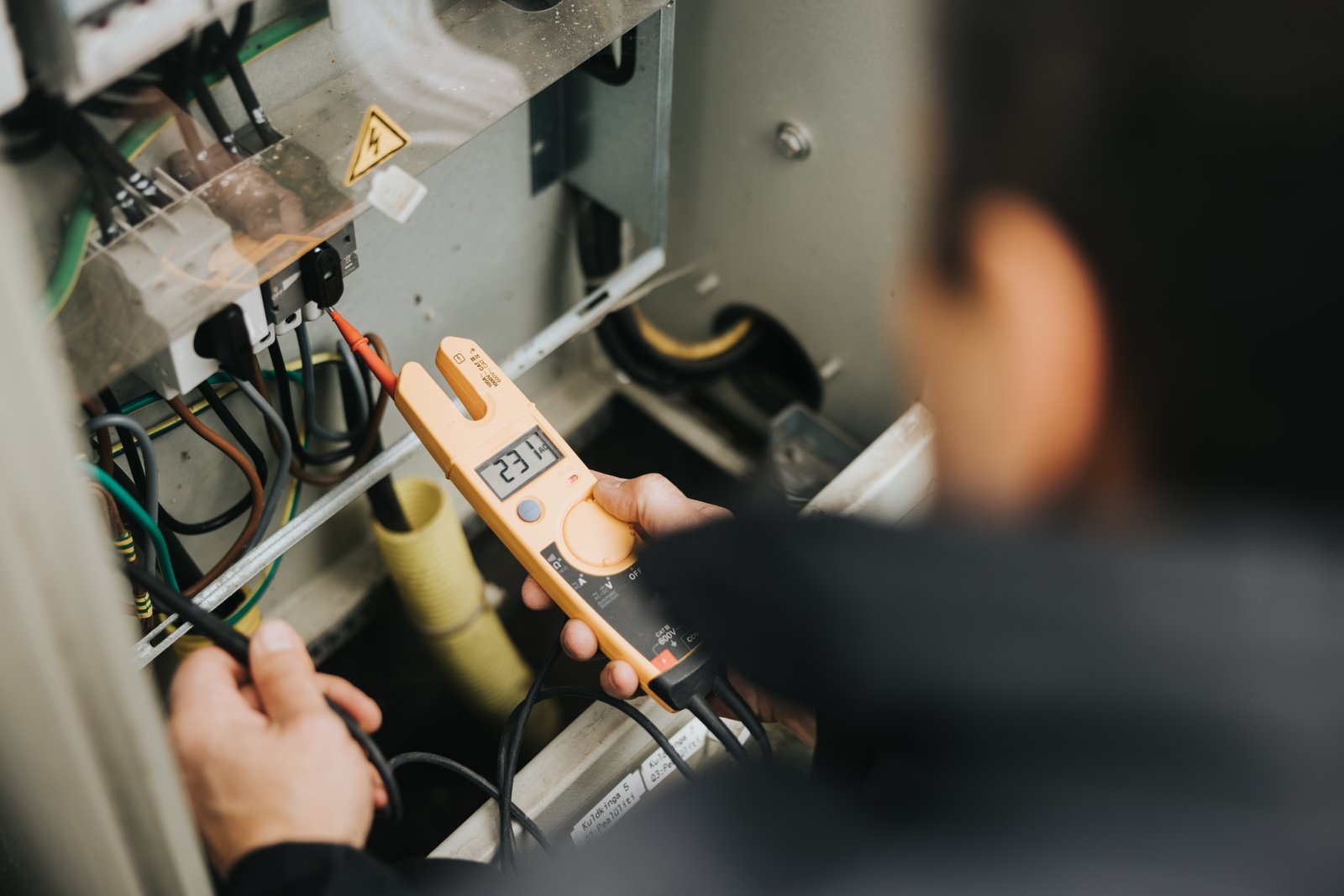
Fault finding and repairs
An RCD that keeps tripping, sockets not working, lights flickering, or power dropping out for no obvious reason. Intermittent electrical faults are the ones that cost people money. We use continuity, insulation resistance and RCD testing to prove the cause rather than guess at it, then repair it once and retest.
Read more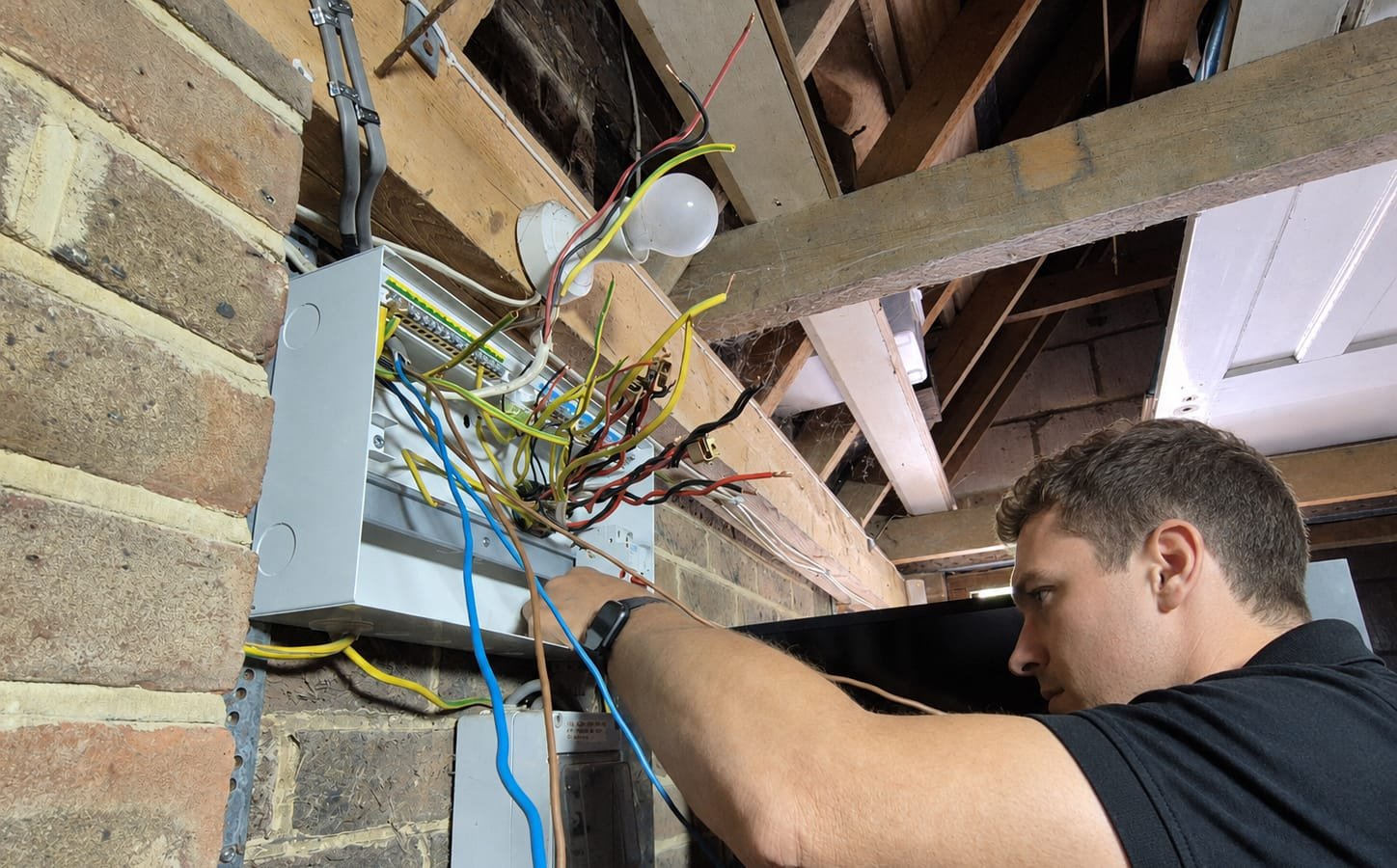
Fuse board and RCD upgrades
Fuse box replacement and consumer unit upgrades, from old rewireable fuses to a metal board with an RCBO on every circuit. A modern board protects each circuit on its own, so one faulty appliance no longer takes the whole house out. Tested, certified and notified under Part P, usually in a day.
Read more
Rewiring and part rewires
Full house rewires and part rewires for properties with rubber, lead or failing early PVC cable, or lighting circuits with no earth. Cable does not last forever, and the test readings tell you whether yours has anything left. Most rewires take two to five days, with power back on each evening.
Read moreNo power, or something smells like it is burning? Call now.
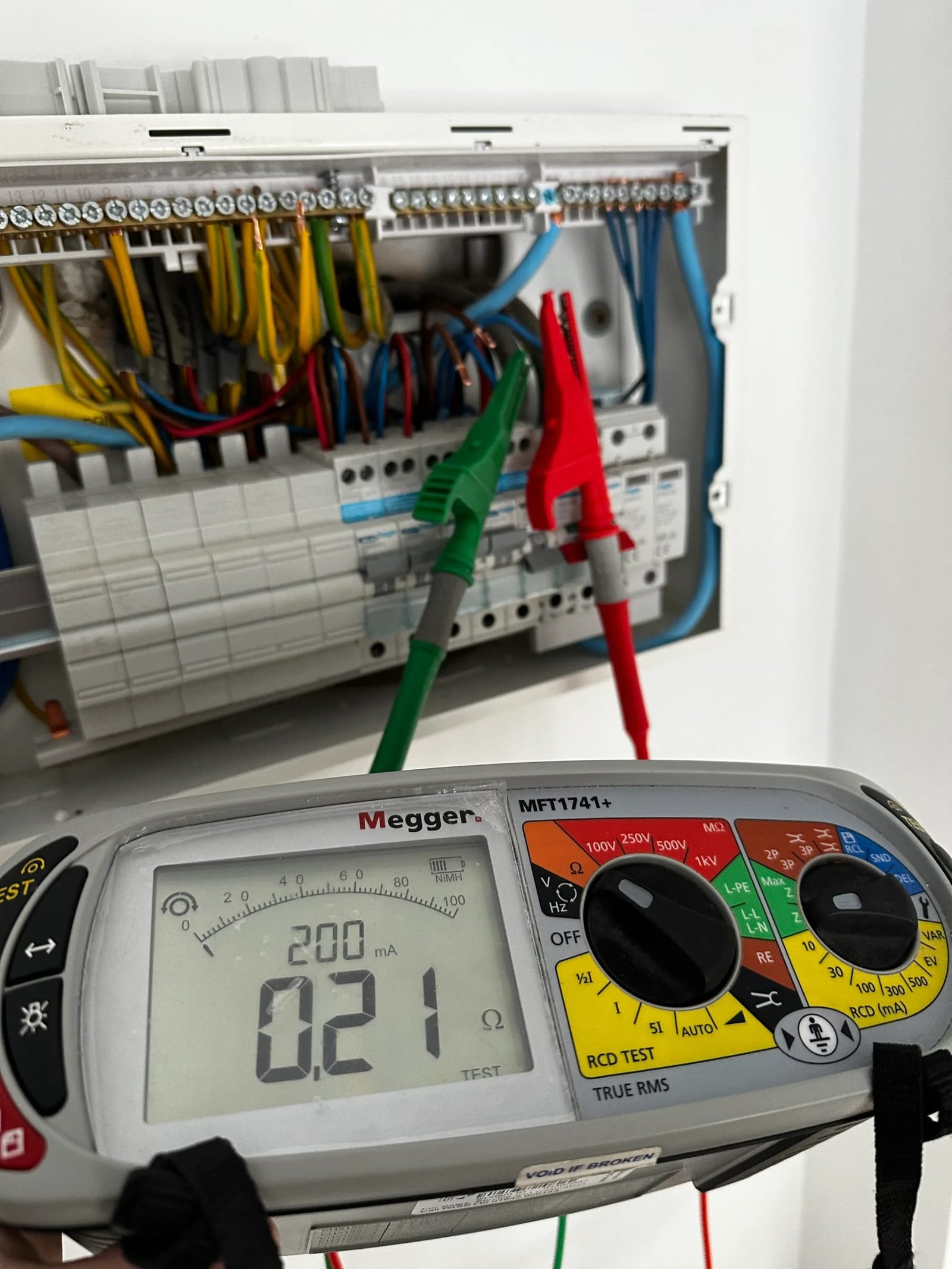
Trusted emergency electricians in Sussex
We have been covering Sussex for 25 years. In that time the wiring regulations have moved through several editions and consumer units have changed shape more than once, while the faults themselves have stayed much the same: loose connections running hot, tired cable, and protection that was never fitted in the first place.
That experience is the difference between guessing and knowing. It is also why we can usually tell you on the phone whether a fault needs a van tonight or a booking on Tuesday, which saves you the out of hours rate more often than you might expect.
TO CONFIRM: add the year you started trading, your scheme registration number and your public liability cover. Only list credentials you can evidence.