

EICR and fixed wire testing
An EICR is a health check for the fixed wiring: what is safe, what needs attention, and what has to be fixed now.
What an EICR actually tells you
An Electrical Installation Condition Report inspects and tests the fixed wiring of a property against BS 7671 and records every observation with a classification code.
- C1 means danger present. Risk of injury, and we make it safe immediately.
- C2 means potentially dangerous. It has to be corrected for the report to be satisfactory.
- C3 means improvement recommended. Not a fail, and no obligation to act.
- FI means further investigation is required before an opinion can be given.
A report with only C3 observations is satisfactory. Any C1, C2 or FI makes it unsatisfactory until the work is done.
Call 01273 095564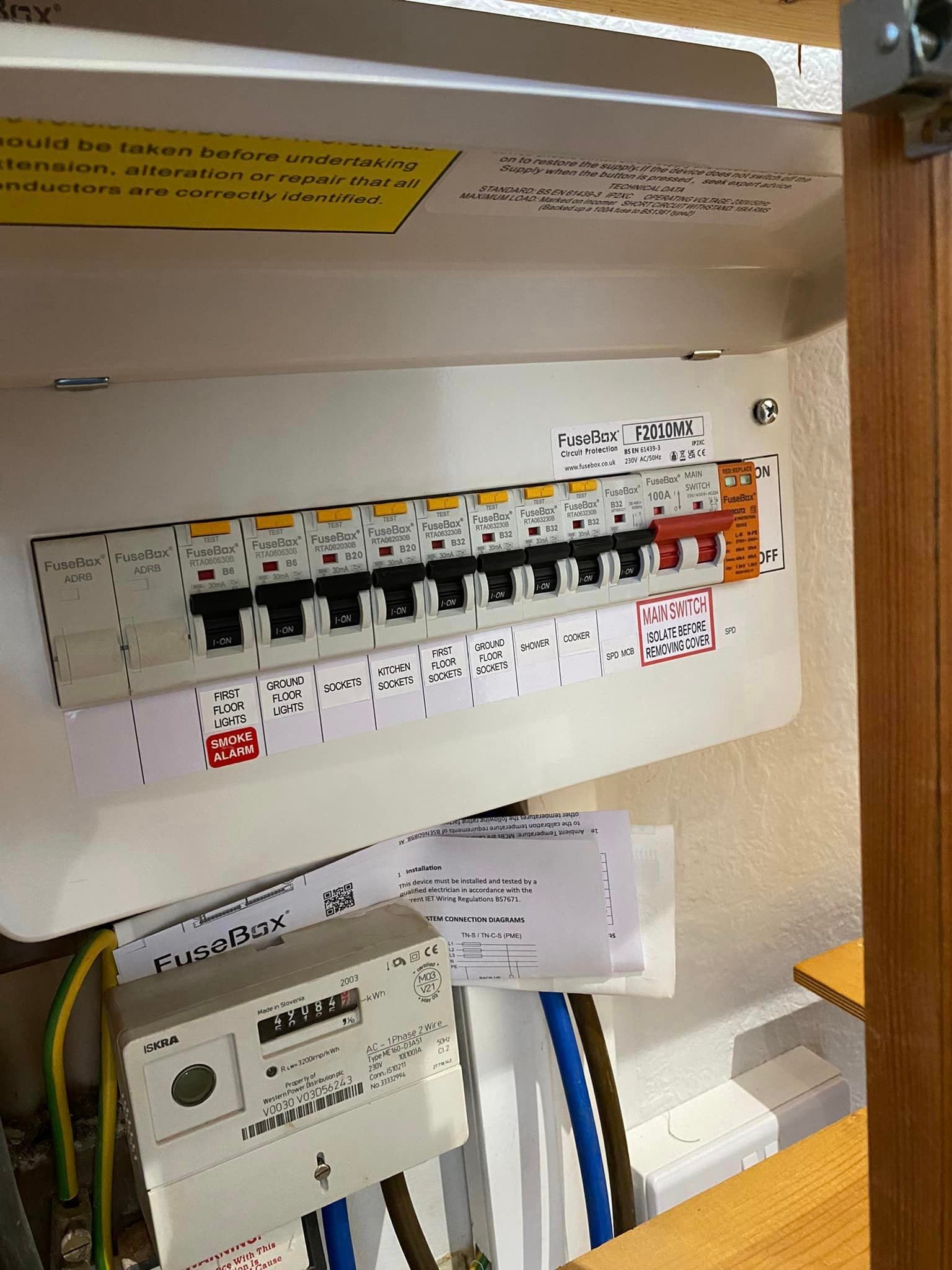
What the inspection actually covers
Fixed wire testing means the permanent installation: the wiring, the board, the accessories and the earthing. Anything you plug in is a separate matter.
The consumer unit
Device types and ratings, RCD provision, enclosure condition, terminal tightness and evidence of overheating inside the board.
Earthing and bonding
The main earthing conductor, the supply earthing arrangement, and protective bonding to gas, water and other services entering the property.
A sample of accessories
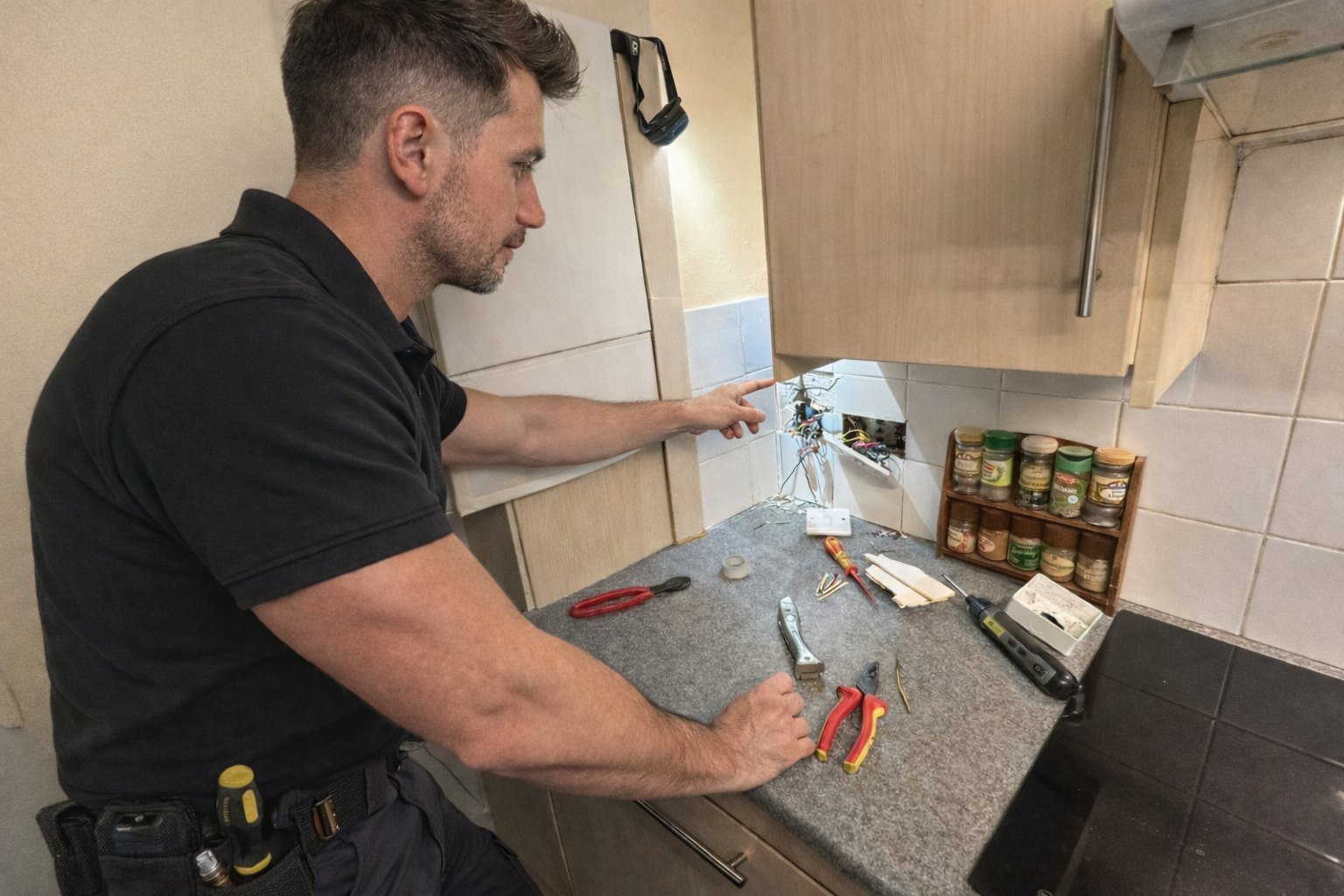
Sockets, switches and outlets opened and inspected for damage, heat, poor terminations and unsuitable modifications, with the sample size recorded.
Cable condition and routing
Insulation condition where visible, correct cable types for the location, and whether cables run in the safe zones the standard defines.
Special locations
Bathrooms and kitchens have specific requirements about what equipment may go where, and those zones are inspected against them.
Circuit testing
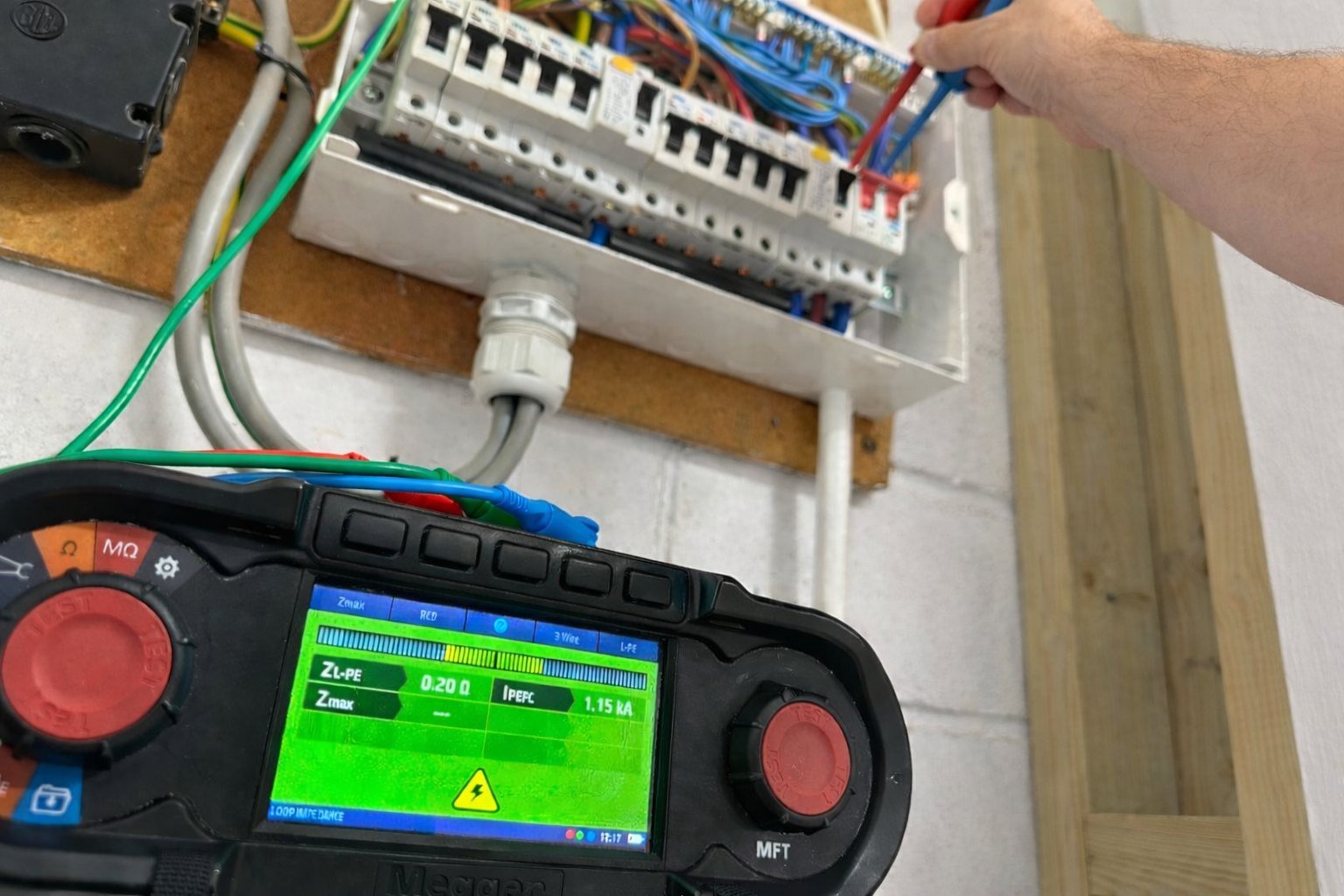
The full dead and live test sequence on every circuit, with each reading written onto the schedule of test results.
The codes, and what each one obliges you to do
Every observation gets a code, and the codes decide whether the report is satisfactory and what happens next.
C1: danger present
Risk of injury right now. We make it safe before leaving, and the report records both the defect and the action taken.
C2: potentially dangerous
Not dangerous this second, but it could become so. Must be corrected before the report can be satisfactory.
C3: improvement recommended
Does not meet the current standard but is not unsafe. No obligation to act, and a C3 alone does not make a report unsatisfactory.
FI: further investigation
Something could not be reached, proved or explained on the day, and no opinion can be given until it is resolved. Counts against a satisfactory outcome.
Satisfactory
No C1, C2 or FI observations. The installation is fit for continued use and the report states the next inspection date.
Unsatisfactory
One or more C1, C2 or FI observations. Not a disaster, just a list: we quote the remedials, complete them, retest and reissue.
EICR, EIC and Minor Works, compared
Three certificates, routinely confused, and asking for the wrong one wastes everybody time.
EICR
A condition report on an existing installation. Inspects and tests what is already there and codes the findings. This is what landlords, buyers and councils ask for.
Electrical Installation Certificate
Issued for new installation work, such as a rewire or a new consumer unit. It certifies work that has just been done, and it is not a condition report on the rest of the property.
Minor Works Certificate
For an alteration or addition to an existing circuit that does not involve a new circuit, such as adding a socket. Smaller in scope, same principle of recorded testing.
What the inspection covers
Consumer unit and protection
Correct devices, correct ratings, RCD protection where required, and enclosure condition.
Sample of accessories
Sockets, switches and outlets opened and inspected for damage, overheating and poor terminations.
Earthing and bonding
Main earthing conductor and protective bonding to gas, water and any other extraneous parts.
Full test sequence
Continuity, insulation resistance, polarity, loop impedance and RCD trip times on every circuit.
Written schedule of results
Every circuit, every reading, so the next electrician can see exactly what was measured and when.
Coded observations
Each defect explained in plain English alongside its code, with a separate quote for the remedial work.
Reports that stand up to scrutiny
An EICR is only as good as the person signing it. Ours record every circuit reading on the schedule, photograph significant defects, and code observations to the standard rather than to whatever drums up remedial work.
Agents and buyers get a document they can rely on, and you get a clear split between what is required and what is merely advisable.
EICR pricesCodes explained in plain English
C1, C2, C3 and FI decide what happens next. We walk you through every observation before we leave the property.
Landlord certificatesThe two that must be fixed
C1 means danger is present right now, and we make it safe before we leave the property. C2 means potentially dangerous, and it has to be corrected before the report can be satisfactory. Both come with a separate written quote.
Remedial pricingRecommended, and unresolved
C3 means improvement recommended: worth knowing, no obligation, and it does not fail the report. FI means further investigation is needed before an opinion can be given, usually where something could not be reached or proved on the day.
How the inspection worksWhat landlords and buyers need
A report with only C3 observations is satisfactory and ready for a tenancy or a sale. Any C1, C2 or FI makes it unsatisfactory until the work is done, at which point we retest and reissue it.
Landlord certificatesEICRs, beyond the basics
What the codes mean when they land on your report, and the defects that produce them most often in this part of Sussex.
The observation codes, with real examples
Every observation on an EICR carries a code, and the codes decide everything.
- C1, danger present: a broken socket with live parts touchable, or a live conductor resting on pipework. We make these safe on the spot, before we leave.
- C2, potentially dangerous: no RCD protection on sockets that can serve outdoor equipment, or main bonding missing from the gas and water services. The report cannot be satisfactory until these are corrected.
- C3, improvement recommended: old wiring colours without a notice, or a plastic consumer unit in good order. Worth knowing about, no obligation to act.
- FI, further investigation: something the inspection could not reach or prove, which must be resolved before an opinion can be given.
A report with only C3 items is satisfactory. That distinction, explained before we leave the property, is most of what landlords and sellers actually need to know.
The failures we see most in Sussex homes
After enough inspections in the same housing stock, the same defects keep taking the top spots.
Sockets without RCD protection lead comfortably, especially in homes where the board predates the requirement. Undersized or missing main bonding to gas and water comes next, common in properties where pipework was replaced and nobody reconnected the earth. Then come the loft and garage specials: DIY spurs in connector blocks, junction boxes buried without access, and circuits extended far beyond what the cable was sized for.
None of this is exotic, and almost all of it is economical to put right. The expensive version is the one where it is discovered by a fault instead of an inspection.
How the visit works
Access agreed
We need the board, the meter, and any loft or cupboard containing accessories. Power is off in stages during the day.
Visual inspection
Damage, wear, overheating, unsuitable modifications and anything that will not meet the current standard.
Dead and live testing
The full BS 7671 sequence, with readings recorded on the schedule as we go.
Coding and discussion
We walk you through what we found before we leave, and what is required rather than merely advisable.
Report issued
The EICR and schedules are emailed within TO CONFIRM working days, with any remedial quote attached separately.
What an inspection turns up
The observations that come up most often in Sussex properties, and what each one means for the person holding the report.
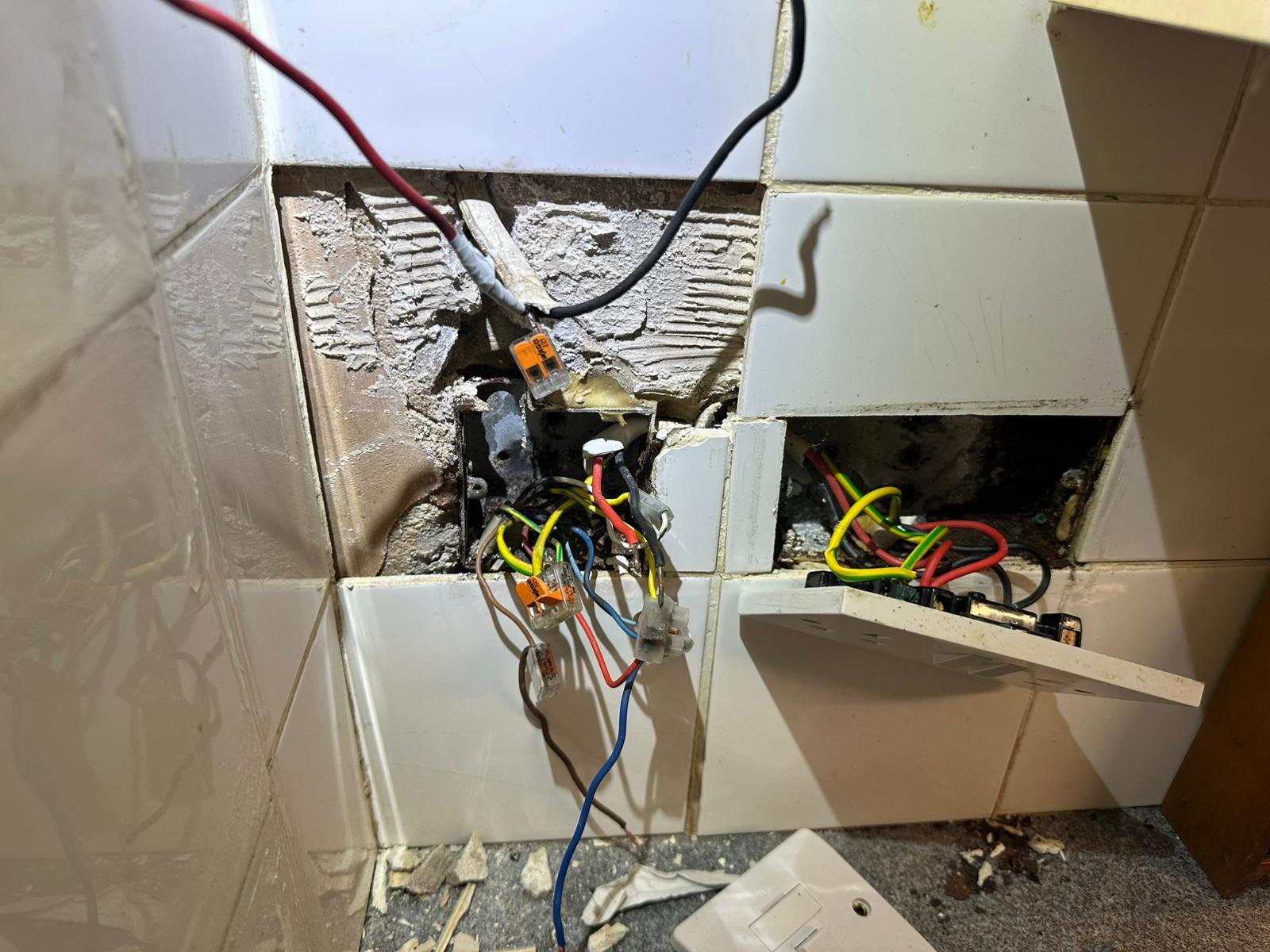
Illustrative examples of work of this type, written to show how a job runs. They are not records of individual customers.
A C2 that has to be put right
Symptom: An inspection before a new tenancy, in a flat last tested more than five years ago.
What the testing shows: Testing finds an exposed conductor inside a damaged accessory. That is a C2, potentially dangerous, and the report cannot be satisfactory while it stands.
What we do: The defect is corrected, the affected circuit is retested, and a satisfactory report is issued with the remedial work listed separately so the landlord can see exactly what changed.
A C3 that is advice, not an order
Symptom: An inspection before a sale, on an installation in reasonable condition throughout.
What the testing shows: The board has no surge protection and one circuit runs on a Type AC device. Neither is dangerous, and both are recorded as C3, improvement recommended.
What we do: The findings are explained in plain terms, priced as optional work rather than presented as a requirement, and the report is issued as satisfactory.
Testing without shutting the business
Symptom: A shop needing fixed wire testing but unable to lose power during trading hours.
What the testing shows: Circuits are tested in sections outside opening hours. Sample sizes and any circuit that could not be accessed are recorded honestly in the limitations of the report.
What we do: The report is issued with the observations coded, the limitations stated, and a date agreed for anything that could not be reached on the first visit.
EICR pricing
An EICR is priced on the number of circuits rather than the number of rooms, because circuits are what get tested.
| Property | Typical circuits | From |
|---|---|---|
| One or two bedroom flat | Up to 6 circuits | £175 |
| Three bedroom house | Up to 10 circuits | £235 |
| Four or more bedrooms | 10 to 16 circuits | £295 |
| HMO or multi-let | Priced after a look at the board arrangement | On survey |
| Small commercial unit | Priced per distribution board | On survey |
| Remedial work | Quoted line by line once the report is issued | Varies |
TO CONFIRM: replace with your own pricing, and state your report turnaround time. Power is interrupted circuit by circuit during the visit.
Inspection intervals, explained honestly
You will see confident numbers quoted everywhere. The truth is that the interval depends on the installation and how it is used, and the inspector sets it on the report itself.
- Rented homes in England: at least every five years, and at the start of a new tenancy, under the 2020 regulations.
- Owner occupied homes: commonly around ten years, or on change of occupancy.
- Commercial premises: commonly around five years, adjusted for the environment and the use.
- Swimming pools, caravan parks and similar: considerably shorter, because the environment is harsher.
Those are the usual recommendations rather than a blanket rule. Where a property has an older installation, heavy use or a harsh environment, the report will specify a shorter interval, and that date is the one that matters.
TO CONFIRM: add your scheme registration number, public liability cover and the name and qualifications of the electrician who reviewed this page. Only list credentials you can evidence.
Questions we get asked
Straight answers to the things people ask before they book. Anything else, the phone is quicker than a form.
How often should an EICR be done?
Owner occupied homes every ten years, rented homes at least every five years and at the start of a new tenancy, and most commercial premises every five years.
How long does it take?
A two bedroom flat is usually two to three hours. A larger house with many circuits can take most of a day.
Will the power be off?
Yes, in stages, circuit by circuit. Tell us in advance about medical equipment, a home office or anything that cannot lose supply.
Can you do the remedial work as well?
Yes, and we quote it separately so you can see the inspection and the repairs priced independently.
What if it fails?
An unsatisfactory report is not a disaster, it is a list. We explain each item, price the required work, and reissue the report once it is complete.
Is an EICR a pass or fail?
Strictly neither: the report concludes satisfactory or unsatisfactory. Any C1, C2 or FI observation makes it unsatisfactory until the work is done and the report can be reissued. A report carrying only C3 recommendations is satisfactory, which surprises many landlords who assume any observation at all is a failure.
Will old wiring colours fail an EICR?
No. Red and black conductors simply mean the circuit predates the mid 2000s colour change, and the correct outcome is a C3 note recommending a warning label at the board where colours are mixed. Condition is what is being judged, and condition is measured, not eyeballed.
Who is allowed to carry out an EICR?
The law asks for a qualified and competent person: in practice, an electrician trained in inspection and testing, working with calibrated instruments and carrying insurance for the work. Ask whoever you engage what qualifications and instruments they bring. A confident answer takes seconds, and hesitation tells you everything.
EICR and fixed wire testing across Sussex
One emergency line covers every town below. Yours has a page of its own, with local response targets and the postcodes we reach.
Other things we fix
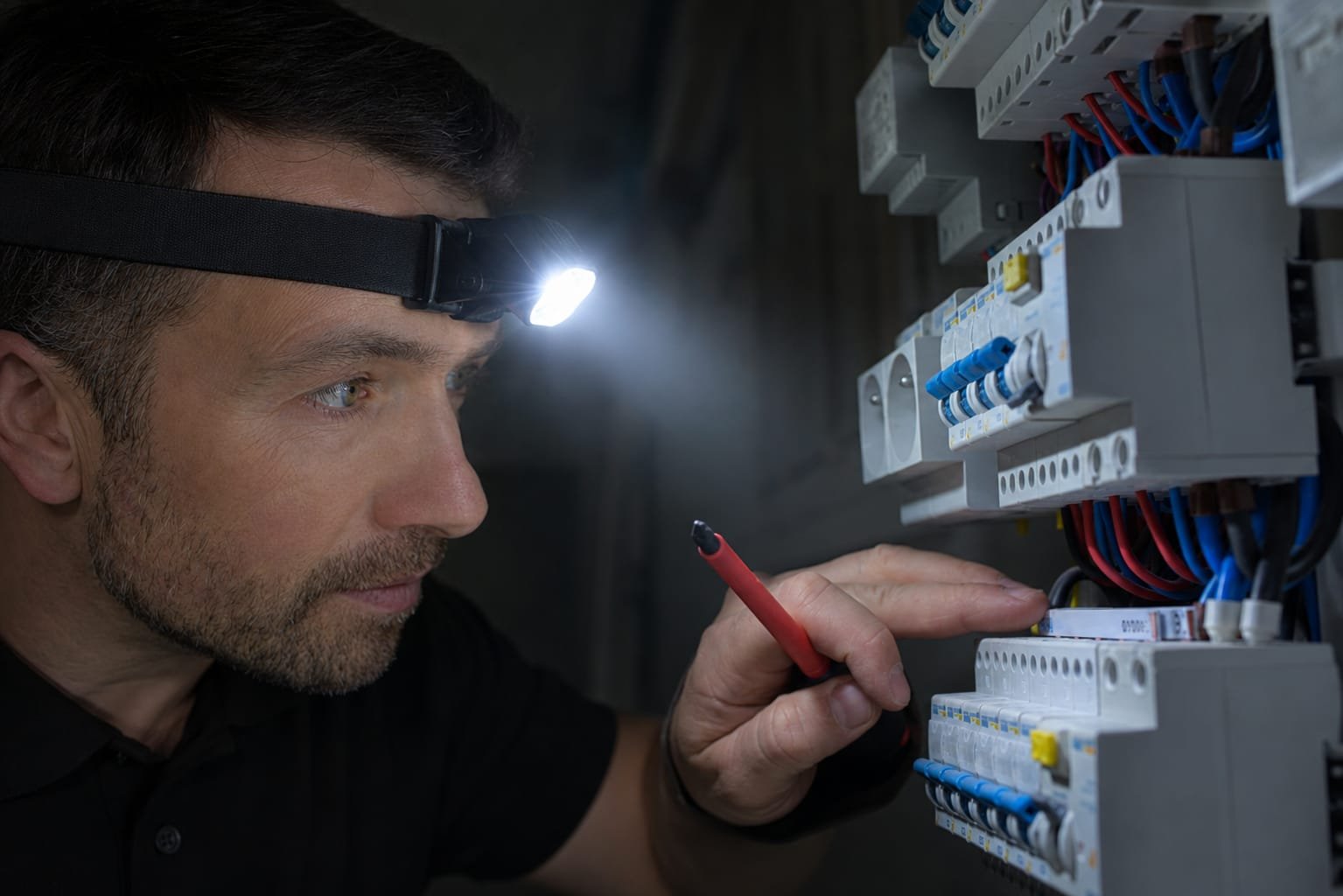
24 hour emergency call-outs
One number, answered by a person, day or night. If you have no power, a burning smell from a socket, or a fuse board that will not reset, this is the emergency electrician call-out you want. We cover Lewes and the rest of Sussex around the clock, including weekends and bank holidays.
Read more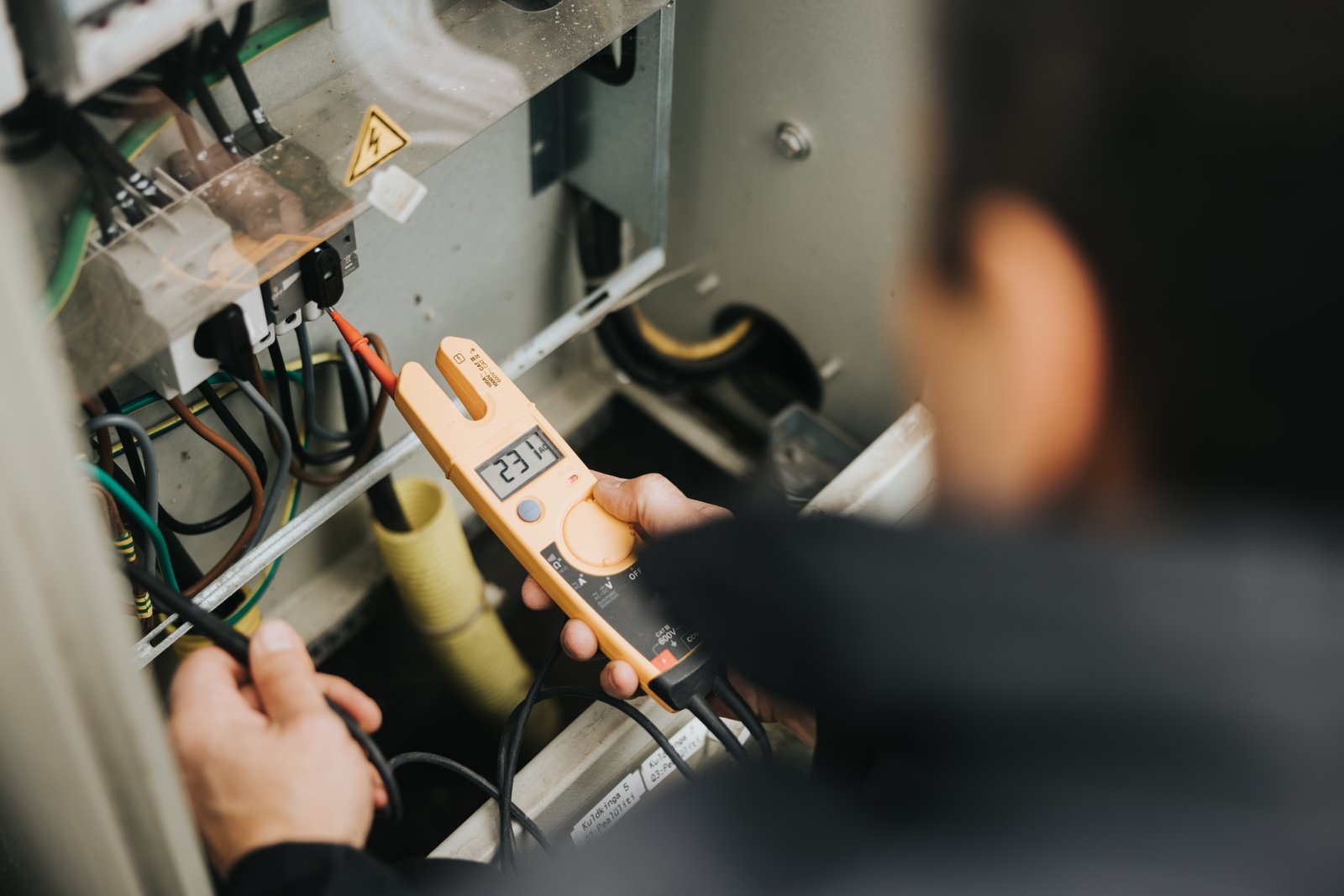
Fault finding and repairs
An RCD that keeps tripping, sockets not working, lights flickering, or power dropping out for no obvious reason. Intermittent electrical faults are the ones that cost people money. We use continuity, insulation resistance and RCD testing to prove the cause rather than guess at it, then repair it once and retest.
Read more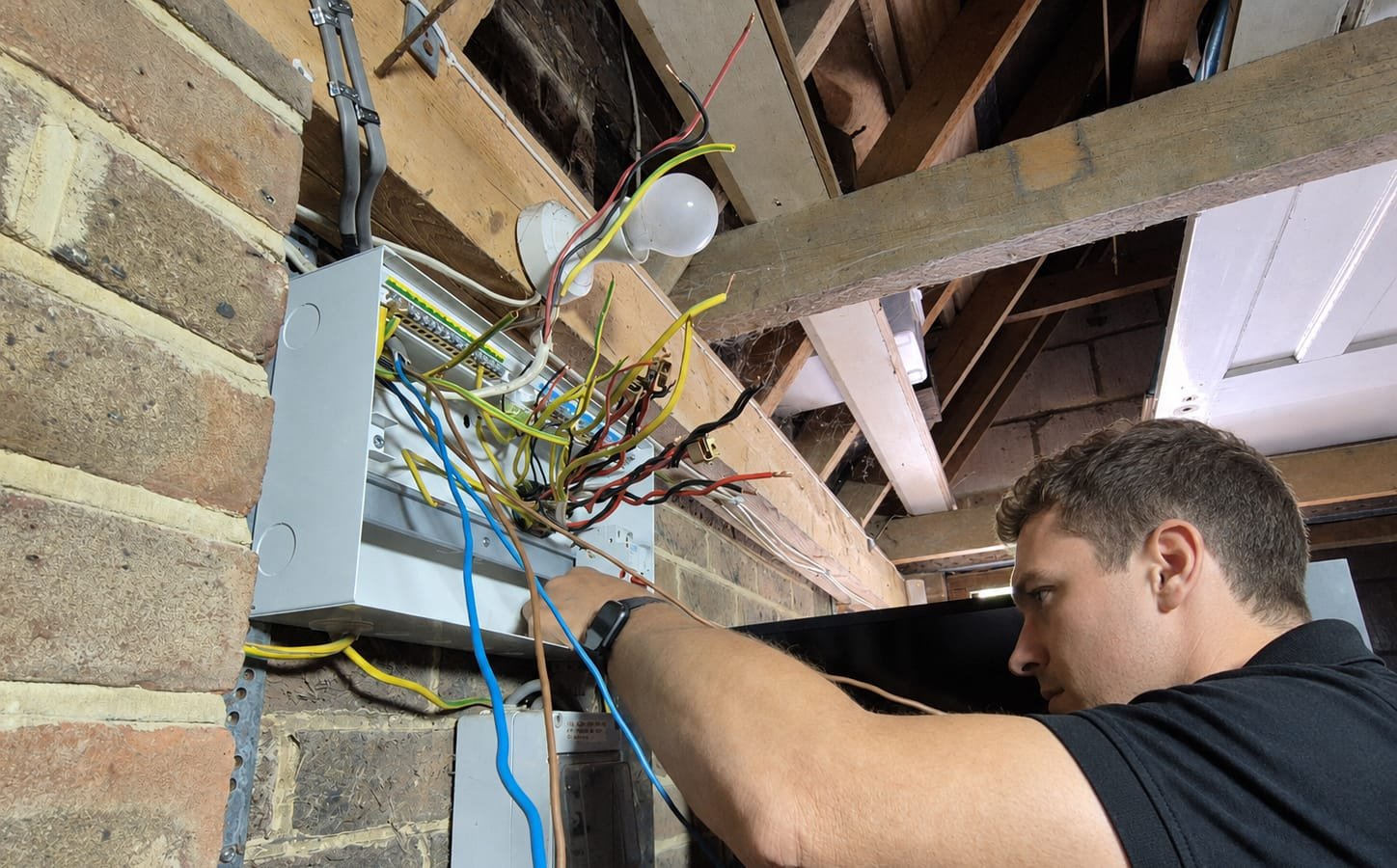
Fuse board and RCD upgrades
Fuse box replacement and consumer unit upgrades, from old rewireable fuses to a metal board with an RCBO on every circuit. A modern board protects each circuit on its own, so one faulty appliance no longer takes the whole house out. Tested, certified and notified under Part P, usually in a day.
Read moreNeed a satisfactory report before a tenancy or a sale? Book a test.
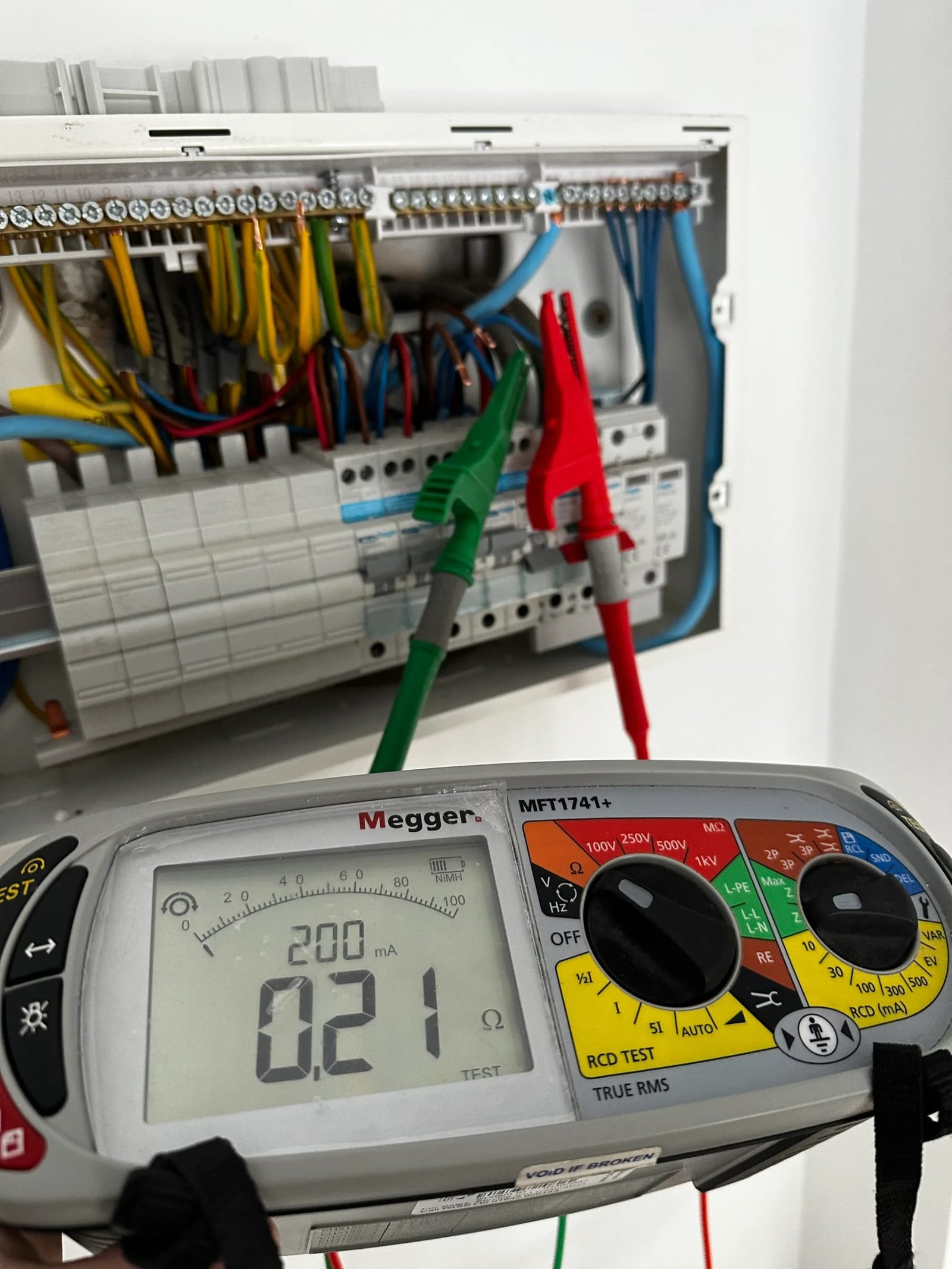
Trusted emergency electricians in Sussex
We have been covering Sussex for 25 years. In that time the wiring regulations have moved through several editions and consumer units have changed shape more than once, while the faults themselves have stayed much the same: loose connections running hot, tired cable, and protection that was never fitted in the first place.
That experience is the difference between guessing and knowing. It is also why we can usually tell you on the phone whether a fault needs a van tonight or a booking on Tuesday, which saves you the out of hours rate more often than you might expect.
TO CONFIRM: add the year you started trading, your scheme registration number and your public liability cover. Only list credentials you can evidence.